
Last Updated:
Have you ever received a message saying “yw” after you thanked someone and wondered what it meant?
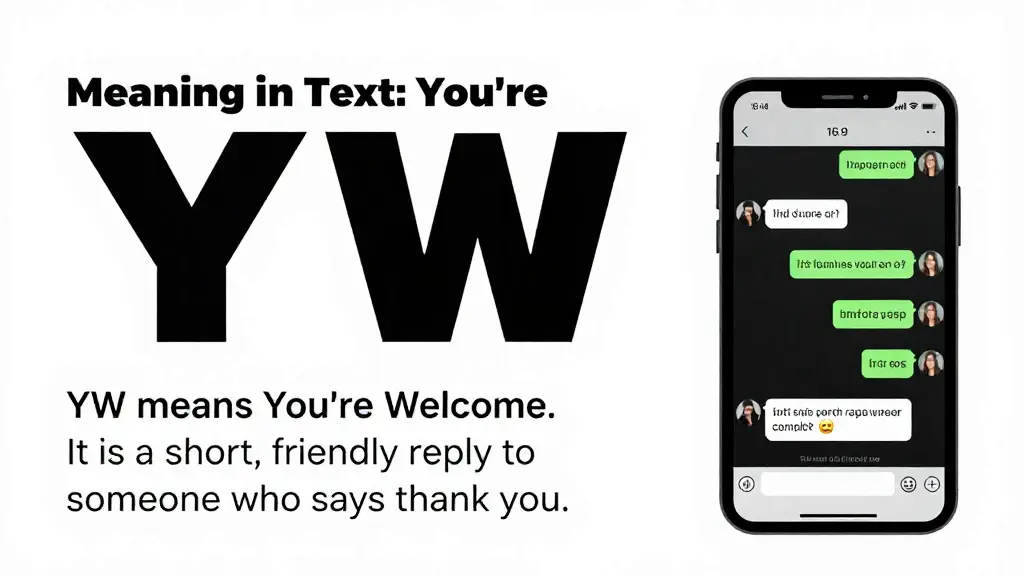
In texting, online chats, and social media, YW usually means “you’re welcome.”
It is a short, casual way to respond when someone says “thank you.”
For example, if you text your friend, “Thanks for helping me with my homework,” they might reply, “yw!” This means “you’re welcome!” and acknowledges your thanks.
The abbreviation is popular because it saves time and makes conversations feel quick and informal.
You may see it on platforms such as Instagram, Snapchat, TikTok, Discord, WhatsApp, and in regular text messages.
However, the meaning of YW can depend on the context. In most everyday conversations, it means “you’re welcome,” but it can have other meanings in particular communities or situations.
In this guide, you will learn what YW means, how to use it correctly, how it differs from similar abbreviations, and how to respond when someone sends it to you.
Quick Answer: What Does YW Mean?
YW means “you’re welcome” in texting and online conversations. It is a casual abbreviation used in response to someone expressing thanks.
Example:
- Person A: “Thanks for sending me the notes!”
- Person B: “YW!”
Meaning: “You’re welcome!”
YW Meaning at a Glance
| Detail | Meaning |
| Abbreviation | YW |
| Full form | You’re welcome |
| Main use | Responding to thanks |
| Tone | Casual and friendly |
| Common platforms | Text messages, social media, online chats |
| Capitalization | YW, yw, or Yw |
| Example | “Thanks for the help!” — “yw 😊” |
What Does YW Mean in Texting?
In texting, YW stands for “you’re welcome.” People use it after someone thanks them for doing something, sharing information, giving advice, or offering help.
It is the shortened version of a common polite expression.
For example:
Conversation 1
Alex: “Thanks for helping me with the assignment.”
Sam: “YW!”
Sam is simply saying, “You’re welcome!”
Conversation 2
Mia: “Thank you for the birthday wishes!”
Lily: “yw ❤️”
Here, Lily acknowledges Mia’s thanks in a friendly way.
Because YW is informal, it is generally more appropriate for friends, family, and casual conversations than for formal business emails or professional letters.
YW Meaning in Simple English
In simple English, YW means “you’re welcome,” which is what you say when someone thanks you.
Imagine that you hold a door open for someone, and they say, “Thank you!” You might reply, “You’re welcome.”
In a text conversation, you can shorten that reply to “yw.”
Here are a few examples:
- “Thanks for the recommendation!” — “yw!”
- “Thank you for explaining that.” — “yw 😊”
- “Thanks for the ride home.” — “yw, glad you got home safely!”
- “Thank you for sharing the picture.” — “yw!”
The abbreviation makes the conversation shorter without changing the basic meaning.
What Does YW Mean on Snapchat?
On Snapchat, YW usually means “you’re welcome.” People often use it when replying to a friend’s thanks in a direct message or chat.
For example:
- You: “Thanks for sending me that snap!”
- Friend: “yw 😂”
Your friend is casually acknowledging your thanks.
The abbreviation does not have a special Snapchat-only meaning in ordinary conversation. Its interpretation is generally the same as in texting and other social media chats.
What Does YW Mean on Instagram?
On Instagram, YW usually stands for “you’re welcome” in direct messages and comments.
For example:
- You: “Thanks for sharing my post!”
- Friend: “YW!”
It can also appear in conversations about recommendations, photos, advice, or shared content.
The tone depends on the surrounding message. “YW 😊” may feel warm and friendly, while a plain “yw” is often just a quick, neutral reply.
What Does YW Mean on TikTok?
On TikTok, YW generally means “you’re welcome” in comments and direct messages.
For example:
- Comment: “Thank you for explaining the trend!”
- Reply: “yw!”
Someone might also use it after sharing a video, answering a question, or giving another user a recommendation.
As with other platforms, context matters. If YW appears in a specialized group, username, or unrelated discussion, it could mean something else.
What Does YW Mean in a Chat?
In a general online chat, YW is a short response to gratitude. It is commonly used in gaming chats, group conversations, messaging apps, and online communities.
Example:
Person A: “Thanks for helping me win that round.”
Person B: “yw, gg!”
Here, YW means “you’re welcome,” and “gg” commonly means “good game.”
Another example:
Person A: “Thanks for answering my question.”
Person B: “yw, happy to help.”
In these examples, YW keeps the conversation casual and efficient.
10 Examples of YW in Text Messages
Here are ten realistic examples of how people use YW in everyday conversations.
- Friend: “Thanks for the notes!”
You: “yw!” - Friend: “Thank you for waiting for me.”
You: “yw 😊” - Sibling: “Thanks for lending me your charger.”
You: “yw, just bring it back later.” - Classmate: “Thanks for explaining the homework.”
You: “yw!” - Friend: “Thank you for the birthday gift.”
You: “yw ❤️” - Online friend: “Thanks for sharing that link.”
You: “yw, hope it helps!” - Coworker: “Thanks for sending the file.”
You: “yw!” - Friend: “Thanks for the recommendation.”
You: “yw, let me know what you think.” - Gaming teammate: “Thanks for the backup.”
You: “yw, nice game!” - Friend: “Thank you for listening to me.”
You: “yw, I’m always happy to listen.”
These examples show that YW can be used by itself or alongside a longer, more personal reply.
How to Reply When Someone Says YW
Usually, you do not need to reply again after someone says YW because it already means “you’re welcome.”
However, if you want to keep the conversation going, you can respond naturally.
Casual Replies
- “😊”
- “No problem!”
- “Thanks again!”
- “Appreciate it!”
- “You’re the best!”
Example Conversation
You: “Thanks for helping me study!”
Friend: “yw!”
You: “I really appreciate it 😊”
This is perfectly natural, although you can also end the conversation after receiving YW.
Is YW Rude or Polite?
YW is generally polite and friendly because it means “you’re welcome.” However, the tone can depend on the situation, the relationship, and how the person normally communicates.
For example:
- “yw 😊” usually feels warm and friendly.
- “YW!!” may feel enthusiastic.
- “yw” is often a simple, neutral response.
- “You’re welcome!” may feel slightly more personal or formal.
A short reply does not automatically mean someone is annoyed or uninterested. Many people use abbreviations simply because they prefer quick messages.
In professional conversations, spelling out “You’re welcome” may be a safer choice, especially when communicating with clients, managers, or people you do not know well.
YW vs. YW! vs. You’re Welcome
These expressions communicate essentially the same thing, but their tone can differ.
| Expression | Typical tone |
| yw | Casual and brief |
| YW! | More energetic or emphatic |
| yw 😊 | Friendly and warm |
| You’re welcome | Clear and neutral |
| You’re very welcome | Warm and slightly more formal |
| No problem | Casual and reassuring |
The punctuation and emoji can influence how a message feels, but they do not create a fixed meaning. The sender’s normal communication style also matters.
Other Meanings of YW
Although “you’re welcome” is the most common meaning of YW in casual texting, abbreviations can have other meanings depending on the context.
In specialized contexts, YW might be used as initials, an organization abbreviation, or shorthand specific to a particular group.
For example, if YW appears in a workplace document, a technical discussion, or an organization’s name, do not automatically assume it means “you’re welcome.”
Tip: If someone sends YW immediately after you say “thanks,” it almost certainly means “you’re welcome.” In other situations, read the surrounding message to determine its meaning.
Common Texting Abbreviations Similar to YW
If you use messaging apps or social media, you may encounter several abbreviations related to YW.
| Abbreviation | Full form | Meaning |
| TY | Thank you | Expressing thanks |
| THX | Thanks | An informal expression of gratitude |
| TYSM | Thank you so much | Expressing stronger gratitude |
| NP | No problem | Saying something was not an inconvenience |
| NVM | Never mind | Telling someone to disregard something |
| WLC | Welcome | A shortened form sometimes used informally |
| BRB | Be right back | Temporarily leaving a conversation |
| LOL | Laughing out loud | Expressing amusement |
| BTW | By the way | Introducing another point |
| IDK | I don’t know | Expressing uncertainty |
These abbreviations help people communicate quickly, but their appropriateness depends on the conversation and audience.
FAQs:
1. What does YW mean in texting?
YW means “you’re welcome” in texting. It is a casual way to respond when someone thanks you for helping them, sharing something, or doing a favor. For example, “Thanks for the help!” followed by “yw!” is a common exchange.
2. What does YW mean on Snapchat?
On Snapchat, YW usually means “you’re welcome.” Someone might send it after you thank them for replying to a message, sharing a snap, or helping you with something. It has essentially the same meaning as in ordinary text messages.
3. What does YW mean on Instagram?
On Instagram, YW generally stands for “you’re welcome.” It can appear in direct messages or comments after someone expresses gratitude for advice, shared content, or assistance. The abbreviation is informal and commonly understood in casual online conversations.
4. Is YW a positive or negative response?
YW is generally a positive or neutral response because it acknowledges someone’s thanks. It is not normally rude. However, like any short message, its tone can depend on the context, punctuation, and relationship between the people communicating.
5. How do you respond to YW?
You usually do not need to reply because YW already means “you’re welcome.” If you want to continue the conversation, you could say “Thanks again,” “I appreciate it,” or simply send a friendly emoji.
6. What is the difference between YW and NP?
YW means “you’re welcome,” while NP means “no problem.” Both can be used after someone says thank you. YW directly acknowledges the gratitude, whereas NP emphasizes that helping was not an inconvenience.
7. Can YW mean something other than you’re welcome?
Yes. In specialized communities, documents, or organizational contexts, YW may stand for something else. However, in ordinary texting and social media conversations, “you’re welcome” is the usual meaning, especially when it follows a thank-you message.
8. Should I use YW in professional messages?
YW may be acceptable in a relaxed workplace chat with colleagues who regularly use abbreviations. For formal emails, client communications, or messages to unfamiliar contacts, writing “You’re welcome” or “Happy to help” is generally clearer and more professional.
9. Does YW mean the same thing in uppercase and lowercase?
Usually, yes. “YW,” “yw,” and “Yw” generally mean “you’re welcome” in casual messaging. Uppercase letters may make the response look more emphatic, but capitalization alone does not fundamentally change the abbreviation’s meaning.
10. Is YW still used in texting?
Yes. YW remains a recognizable abbreviation in casual digital communication. People use it in text messages, online chats, and social media when they want to acknowledge thanks quickly. Some people prefer longer replies, so usage varies by age, platform, and personal style.
Conclusion:
The most common YW meaning in texting and social media is “you’re welcome.”
It is a quick, informal way to respond when someone thanks you for helping, sharing information, or doing a favor.
You may see YW on Snapchat, Instagram, TikTok, WhatsApp, gaming chats, and other messaging platforms.
It is generally friendly or neutral, although the surrounding conversation can affect its tone.
Remember: when someone says “thanks” and you reply “yw,” you are simply saying “you’re welcome.”
It is an easy abbreviation to recognize and use in everyday online conversations.

Lexical Research Expert specializing in word origins, historical language development, and dictionary references.