
Last Updated:
Have you seen the word “SAP” in a text message, at work, or while reading about technology?
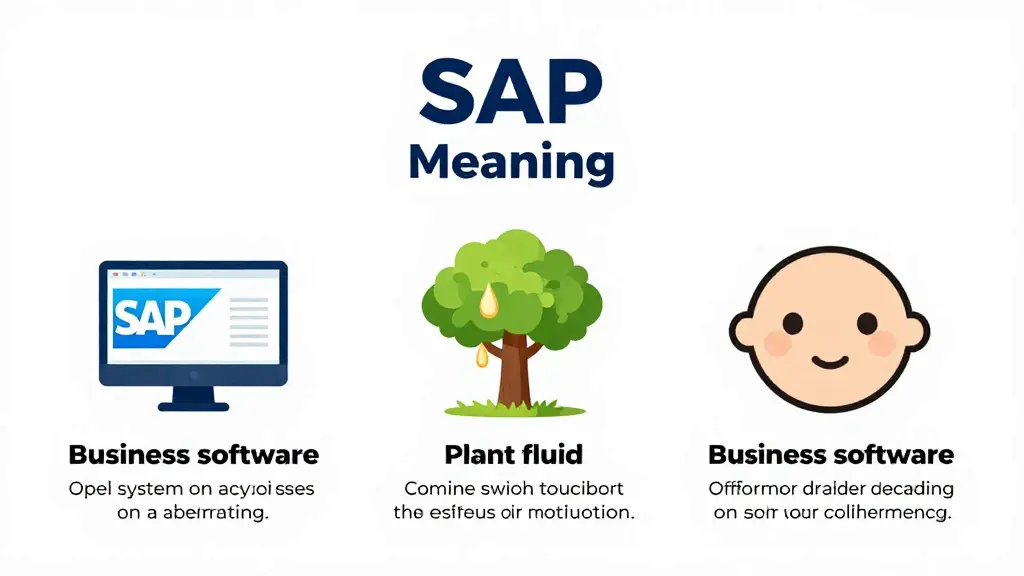
SAP can have different meanings depending on where you see it.
It may refer to a software company, an informal English word, or an abbreviation used in a particular field.
In everyday English, sap can mean the liquid that moves through plants, carrying water and nutrients.
As a verb, “to sap” means to gradually weaken or use up someone’s strength or energy.
In business and technology, SAP is also the name of a major software company known for business management systems.
In texting, its meaning depends on the conversation, and it does not have one universally accepted slang definition.
This guide explains the main meanings of sap so you can understand the word in different situations.
Quick Answer
Sap has several meanings. In nature, it is the fluid found in plants. As a verb, it means to weaken or drain energy. In business and technology, SAP refers to a company that develops software for managing business operations.
Quick Meaning Table
| Feature | Meaning |
| Word | Sap / SAP |
| Part of speech | Noun and verb |
| Plant meaning | Fluid that moves through plants |
| Verb meaning | To weaken or drain energy |
| Informal meaning | A gullible or easily fooled person |
| Technology meaning | A business software company |
| Example | “The long journey sapped my energy.” |
1. What Does Sap Mean in Simple English?
In simple English, sap has three common meanings.
1. Plant liquid
Sap is the fluid that moves through a plant and helps carry water, minerals, sugars, and other substances.
Example: “The tree’s sap began to flow in spring.”
2. To weaken or drain energy
When used as a verb, sap means to slowly reduce someone’s strength, energy, or confidence.
Example: “The long day sapped my energy.”
3. A gullible person
Informally, calling someone a sap can mean that the person is easily tricked or persuaded.
Example: “Don’t be a sap and believe every online promise.”
This third meaning can sound insulting, so use it carefully.
2. What Does SAP Mean in Business and Technology?
In business and technology, SAP refers to a major enterprise software company. The name originally came from the German phrase Systemanalyse Programmentwicklung, commonly translated as “Systems Analysis Program Development.”
SAP develops software that helps organizations manage activities such as accounting, sales, purchasing, inventory, and human resources.
For example:
- A company may use SAP to manage its finances.
- A warehouse may use SAP software to track inventory.
- A business may use SAP to organize purchasing and sales records.
You might hear someone say, “I work with SAP.”
This usually means the person uses or works with SAP business software.
The technology meaning is different from the ordinary English word “sap.”
3. What Does SAP Mean in Texting?
In texting, SAP does not have one fixed, widely accepted meaning. Its interpretation depends on the message and the people communicating.
Sometimes, someone may use “sap” as an ordinary English word to describe a person who is too trusting or easily fooled.
Example:
Message: “Don’t be such a sap.”
Meaning: Don’t be so easily fooled.
In other cases, SAP may refer to the software company, especially in conversations about jobs, business, or technology.
If someone sends only “SAP,” you may need to ask what they mean because the abbreviation is not clear without context.
4. What Does Sap Mean as Slang?
As informal slang, a sap is a person who is easily tricked, overly trusting, or easily persuaded.
It can also describe someone who acts foolishly because of strong emotions, although the exact meaning depends on the context.
Examples:
- “He felt like a sap after believing the fake offer.” — He felt foolish for trusting the offer.
- “Don’t be a sap.” — Don’t let someone fool you.
- “I’m such a sap for sad movies.” — I am easily moved emotionally by sad movies.
The last example shows a softer, playful use. Here, the speaker means that sad movies affect their emotions easily.
5. What Does It Mean to Sap Someone’s Energy?
As a verb, “sap” means to gradually weaken or drain something.
The word is often used with energy, strength, confidence, motivation, or resources.
Examples:
- “The heat sapped my energy.” — The heat made me feel tired.
- “Stress can sap your confidence.” — Stress can reduce your confidence.
- “The long meeting sapped everyone’s patience.” — The meeting gradually made people less patient.
- “The ongoing problem sapped the team’s motivation.” — The problem reduced the team’s motivation.
This use is common in everyday English, news articles, and professional writing.
6. What Does Tree Sap Mean?
Tree sap is the fluid that moves through a tree’s tissues. It helps transport water, nutrients, and sugars needed for growth and other plant processes.
For example:
“The tree released sticky sap after its bark was damaged.”
Some trees, such as maple trees, produce sap that can be collected and processed into maple syrup.
Tree sap is a natural substance and has nothing to do with the technology company SAP or the slang meaning of sap.
7. What Does SAP Mean in a Job Description?
In a job description, SAP usually refers to business software or experience using SAP systems.
For example, a job advertisement may ask for “SAP experience.”
This means the employer wants someone who knows how to use the relevant SAP software.
Different jobs may require knowledge of different SAP systems or modules, such as finance, purchasing, sales, or supply chain management.
Example:
“The company is looking for an employee with SAP skills.”
Meaning: The company wants someone who can work with its SAP software.
8. SAP vs. Sap: What Is the Difference?
The difference often comes from capitalization and context.
| Form | Common meaning |
| sap | Fluid in plants |
| sap | To weaken or drain energy |
| a sap | An easily fooled or overly trusting person |
| SAP | A business software company |
| SAP software | Tools used to manage business operations |
Capital letters can help distinguish the company name from the ordinary word, but context is the most reliable clue.
For example, “SAP training” likely refers to business software, while “tree sap” refers to plant fluid.
9. Ten Examples of Sap in Sentences
1. “The tree’s sap flowed in spring.”
Meaning: Fluid moved through the tree.
2. “The hot weather sapped my energy.”
Meaning: The hot weather made me feel tired.
3. “Don’t be a sap and trust every stranger.”
Meaning: Don’t be too trusting.
4. “The stressful week sapped her confidence.”
Meaning: The stressful week reduced her confidence.
5. “Maple sap is used to make maple syrup.”
Meaning: The fluid from maple trees can be processed into syrup.
6. “He works with SAP software.”
Meaning: He uses business management software from SAP.
7. “The company uses SAP to manage its accounts.”
Meaning: The company uses SAP software for financial tasks.
8. “Lack of sleep can sap your concentration.”
Meaning: Not getting enough sleep can reduce your ability to focus.
9. “I’m a sap for romantic stories.”
Meaning: Romantic stories easily affect my emotions.
10. “The long delay sapped the team’s enthusiasm.”
Meaning: The delay reduced the team’s excitement and motivation.
10. Sap Synonyms and Antonyms
The synonyms and antonyms of sap depend on which meaning you want.
Synonyms of Sap
When sap means plant fluid:
- Plant fluid
- Tree fluid
When sap means weaken:
- Drain
- Weaken
- Exhaust
- Deplete
- Diminish
When sap means an easily fooled person:
- Fool
- Gullible person
- Dupe
These words have different tones. For example, “dupe” often suggests someone who has been tricked, while “gullible” describes someone who is too ready to believe others.
Antonyms of Sap
When sap is used as a verb meaning “to weaken,” possible opposites include:
- Strengthen
- Energize
- Restore
- Reinforce
- Boost
Example:
“The difficult experience sapped his confidence.”
Opposite:
“The encouragement strengthened his confidence.”
FAQs:
1. What does sap mean in simple words?
Sap can mean the fluid inside plants, to weaken or drain energy, or an easily fooled person. The meaning depends on the sentence.
2. What does SAP stand for in technology?
SAP originally came from the German phrase Systemanalyse Programmentwicklung, commonly translated as “Systems Analysis Program Development.” It is the name of a business software company.
3. What does sap mean in texting?
In texting, sap may be used as an ordinary English word for someone who is easily fooled or emotionally soft. SAP may also refer to business software. Context is important.
4. What does it mean to sap someone’s energy?
It means to gradually reduce someone’s energy, strength, or motivation. For example, “The long trip sapped my energy.”
5. What does calling someone a sap mean?
Calling someone a sap usually means that the person is easily tricked or overly trusting. It can sound insulting, depending on how it is said.
6. What is tree sap?
Tree sap is the fluid that moves through a tree and carries water, nutrients, and sugars needed for its growth and functions.
7. Is SAP a company?
Yes. SAP is a major software company that provides systems used by organizations to manage business activities.
8. What is a synonym for sap?
When sap means weaken, synonyms include drain, exhaust, weaken, and deplete. When it refers to a person, synonyms may include fool or gullible person.
9. What is the opposite of sap?
When sap means to weaken, opposites include strengthen, energize, restore, and boost. There is no single opposite that fits every meaning of the word.
10. How do you use sap in a sentence?
You can say, “The exhausting journey sapped my energy.” This means the journey gradually made you feel tired.
Conclusion:
Sap is a word with several meanings.
It can refer to the fluid inside plants, describe the act of weakening or draining energy, or informally describe someone who is easily fooled.
In business and technology, SAP is the name of a company known for business management software.
To understand the correct meaning, look at the words around it.
For example, “tree sap” refers to plant fluid, while “SAP software” refers to business technology.

Lexical Research Expert specializing in word origins, historical language development, and dictionary references.