
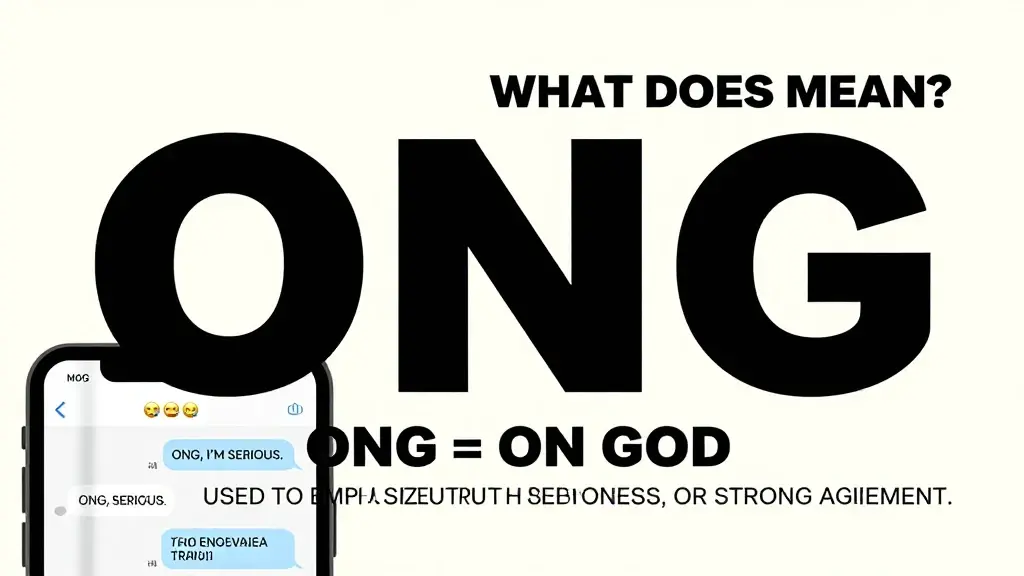
ONG means “on God.” It is an informal slang expression used in texting and social media to show that someone is being completely honest, serious, or sincere.
When a person says “ONG,” they are often saying something like “I swear,” “I’m telling the truth,” or “I’m being serious.”
You may see ONG in TikTok comments, Instagram messages, Snapchat chats, gaming conversations, and other online spaces.
For example, someone might say, “ONG, that movie was amazing,” meaning they strongly believe what they are saying.
The phrase comes from the expression “on God,” which is used to emphasize that a statement is true or that a person is serious about what they are saying.
ONG is simply a shortened form used in fast, casual online communication.
Although ONG is common in slang, its tone depends on the situation.
It can show strong agreement, honesty, surprise, frustration, or emphasis.
Quick Answer
ONG means “on God.” It is internet slang used to emphasize that someone is telling the truth, being serious, or strongly agreeing with something. It is similar to saying “I swear,” “for real,” or “I’m serious.” ONG is mainly used in casual texts, chats, comments, and social media.
Quick Meaning Table
| Term | Main meaning | Full form | Pronunciation | Usage | Example |
| ONG | On God | On God | O-N-G | Texting, slang, social media | “ONG, that was so funny.” |
What Does ONG Mean?
The ONG meaning is “on God.”
People use ONG when they want to emphasize that something they said is true or that they genuinely mean it.
For example:
“ONG, I didn’t take your charger.”
This means:
“I swear I didn’t take your charger.”
Another example is:
“ONG, this is the best pizza I’ve ever had.”
Here, ONG adds strong emphasis. The person is saying that they truly believe the pizza is very good.
The expression does not always have a serious religious meaning when used as slang. In many online conversations, it simply works as an emphatic phrase similar to “I swear” or “for real.”
ONG Meaning in Simple Words
In simple words, ONG means “I swear” or “I’m telling the truth.”
People use it when they want others to believe them or understand that they are being serious.
For example:
- “ONG, I saw him there.”
- “ONG, that was hilarious.”
- “ONG, I’m not joking.”
The meaning can change slightly with the context, but the main idea is strong emphasis or sincerity.
A simple way to remember it is:
ONG = On God = I swear / I’m serious.
Different Meanings of ONG
1. On God
This is the main slang meaning of ONG.
It is used to emphasize honesty or seriousness.
Example:
“ONG, I didn’t know about the meeting.”
The speaker is strongly saying that they did not know.
2. Strong Agreement
ONG can also be used when someone strongly agrees with another person’s statement.
Example:
Person 1: “That was the funniest video ever.”
Person 2: “ONG!”
Here, ONG means something like:
“Seriously!” or “I completely agree!”
3. Strong Emphasis
Sometimes ONG simply adds extra emphasis to a statement.
Example:
“ONG, you need to try this game.”
The person is strongly recommending the game.
ONG Full Form
The ONG full form in internet slang is:
On God
The letters represent the phrase:
- O = On
- N = No separate word; the abbreviation follows the phrase’s initial letters
- G = God
More precisely, ONG is formed from the initial letters of On God while retaining the “n” from “on.” It is used as a shortened written form of the phrase.
You may also see ONG written in lowercase as ong. The meaning is normally the same.
ONG Meaning in Texting
The ONG meaning in texting is usually “on God.”
People use it when they want to stress that they are telling the truth, are serious, or strongly agree with something.
Examples:
“ONG, I was there.”
Meaning:
“I swear I was there.”
“ONG, that test was hard.”
Meaning:
“I’m serious, that test was hard.”
“ONG!”
Meaning:
“I swear!” / “For real!” / “I completely agree!”
Because ONG is slang, it is most suitable for casual conversations with friends or people who understand internet slang.
ONG Meaning on Social Media
The ONG meaning on social media is generally the same as its texting meaning: “on God.”
It can appear in:
- TikTok comments
- Instagram comments and messages
- Snapchat chats
- Reddit discussions
- Gaming chats
- Other informal online conversations
For example:
“ONG this song is so good.”
The person is strongly expressing their opinion.
Or:
“ONG, he actually did that.”
Here, ONG emphasizes surprise and disbelief.
There is no special official meaning of ONG on TikTok, Instagram, Snapchat, or another particular social platform. The slang meaning generally stays the same.
How to Pronounce ONG
When ONG is used as an abbreviation, people commonly pronounce the letters individually:
O-N-G
However, because it represents “on God,” some people may simply say the full phrase when speaking.
In written online conversations, ONG is much more common than saying the abbreviation aloud.
Origin of ONG
ONG comes from the phrase “on God.”
The expression “on God” has been used as an oath or emphatic statement to show that someone is telling the truth or making a serious promise. In modern slang, especially online, it can also be used more casually to mean “I swear,” “for real,” or “I strongly agree.”
The abbreviation ONG became popular as part of internet and social-media slang, where shortened expressions are often used to make messages quicker to type.
The slang use should be understood from context. Someone using ONG in a casual online message may not be making a formal religious statement; they may simply be emphasizing what they have said.
How to Use ONG in a Sentence
Here are 10 natural ONG examples:
- “ONG, I didn’t do it.”
- “ONG, that was the funniest thing ever.”
- “ONG, you have to try this game.”
- “I was so tired yesterday, ONG.”
- “ONG, that test was difficult.”
- “He is telling the truth, ONG.”
- “ONG, I can’t believe they won.”
- “That restaurant is amazing, ONG.”
- “ONG, I thought you already knew.”
- “ONG! I completely agree with you.”
These examples show how ONG can express honesty, emphasis, agreement, surprise, or strong feelings.
Conversation Examples
Conversation 1
Alex: “Did you really see that celebrity?”
Sam: “ONG, yes! I saw them at the mall.”
Alex: “No way!”
Here, ONG emphasizes that Sam is telling the truth.
Conversation 2
Mia: “That game was so difficult.”
Lena: “ONG! I couldn’t even finish the first level.”
Here, ONG shows strong agreement.
Synonyms and Similar Words
ONG does not have one exact synonym in every situation. Several casual expressions can have a similar meaning.
I Swear
“I swear” is often the closest everyday alternative when ONG is used to emphasize truth.
Example:
“I swear, I didn’t take it.”
For Real
“For real” can show that someone is serious or strongly agrees.
Example:
“That movie was amazing, for real.”
Seriously
“Seriously” emphasizes that someone means what they are saying.
Example:
“Seriously, you need to see this.”
No Lie
“No lie” means the speaker is claiming to be truthful.
Example:
“No lie, that was the best concert.”
FR
FR is another common internet abbreviation meaning “for real.”
Example:
“FR, that was hilarious.”
The best alternative depends on the sentence and the tone of the conversation.
Common Confusions
ONG vs. OMG
These abbreviations are different.
- ONG = “on God”
- OMG = “oh my God”
ONG usually emphasizes truth, seriousness, or agreement.
OMG usually expresses surprise, excitement, shock, or another strong reaction.
ONG vs. FR
FR means “for real.”
Both can express agreement or seriousness, but ONG comes from “on God,” while FR directly means “for real.”
ONG vs. I Swear
“I swear” is a normal English phrase. ONG is an informal internet abbreviation that can serve a similar purpose.
ONG vs. On God
On God is the full phrase behind the slang abbreviation. ONG is the shortened form used in online communication.
Is ONG Offensive?
ONG is not normally considered an offensive word. It is informal slang used to emphasize honesty, seriousness, or agreement.
However, the phrase “on God” has a religious reference. Some people may prefer not to use religious expressions casually, while others use them as ordinary slang.
If you are speaking with someone you do not know well or writing something formal, it is safer to use clearer expressions such as:
- “I’m serious.”
- “I’m telling the truth.”
- “Honestly.”
- “For real.”
ONG is best suited to casual conversations.
FAQs:
1. What does ONG mean?
ONG means “on God.” It is internet slang used to emphasize that someone is telling the truth, being serious, or strongly agreeing with something. Depending on the context, it can be similar to saying “I swear,” “for real,” or “I’m serious.”
2. What is the ONG full form?
The common slang meaning of ONG is “on God.” It is a shortened form of the phrase used in casual online communication. People may type ONG instead of writing the full phrase when they want to emphasize that something is true or that they strongly agree.
3. What does ONG mean in texting?
In texting, ONG usually means “on God.” It is used to emphasize honesty, seriousness, agreement, or a strong opinion. For example, “ONG, that was funny” means the person strongly believes that something was funny or is emphasizing their statement.
4. What does ONG mean on TikTok?
On TikTok, ONG generally means “on God.” Users may put it in comments, captions, or messages to show strong agreement, honesty, surprise, or emphasis. It does not have a separate official TikTok meaning; its interpretation comes from the surrounding conversation.
5. What does ONG mean on Snapchat?
On Snapchat, ONG is commonly used as casual slang for “on God.” Someone might write ONG to emphasize that they are telling the truth or that they strongly agree with something. Like other internet slang, the exact tone depends on the message around it.
6. Is ONG the same as OMG?
No. ONG and OMG have different meanings. ONG usually means “on God” and emphasizes truth, seriousness, or agreement. OMG means “oh my God” and is commonly used to show surprise, excitement, shock, or strong emotion.
7. Is ONG a bad word?
No, ONG is not normally considered a swear word or offensive term. It is informal internet slang. However, because “on God” contains a religious reference, some people may prefer not to use it casually. In formal situations, clearer phrases are usually better.
8. What is another word for ONG?
Depending on the context, alternatives include “I swear,” “for real,” “seriously,” “honestly,” and “no lie.” These expressions are not exact replacements in every sentence, but they can communicate a similar feeling of honesty, emphasis, or strong agreement.
9. What does ONG mean from a girl or boy?
ONG does not have a special meaning based on whether the person using it is a girl or a boy. It generally means “on God” and is used to show seriousness, honesty, agreement, or emphasis. The surrounding message gives more information about the intended tone.
10. Can I use ONG in formal writing?
It is better not to use ONG in formal writing. It is internet slang and is mainly suited to casual texts, chats, comments, and social media. In formal writing, use expressions such as “I’m serious,” “honestly,” “I strongly agree,” or “I’m telling the truth.”
Conclusion:
The main ONG meaning is “on God.”
It is informal internet slang used to show that someone is telling the truth, being serious, strongly agreeing, or emphasizing an opinion.
You may see it in texts, TikTok comments, Instagram messages, Snapchat chats, and gaming conversations.
ONG is not normally offensive, but its religious reference may make it unsuitable for some formal or personal situations.
When you see ONG online, look at the surrounding words to understand whether the person means “I swear,” “for real,” or simply wants to add strong emphasis.

Professional Language Consultant with expertise in vocabulary building and academic writing resources.