
Last Updated:
Have you ever heard someone say, “Don’t sully your reputation,” and wondered what they meant?
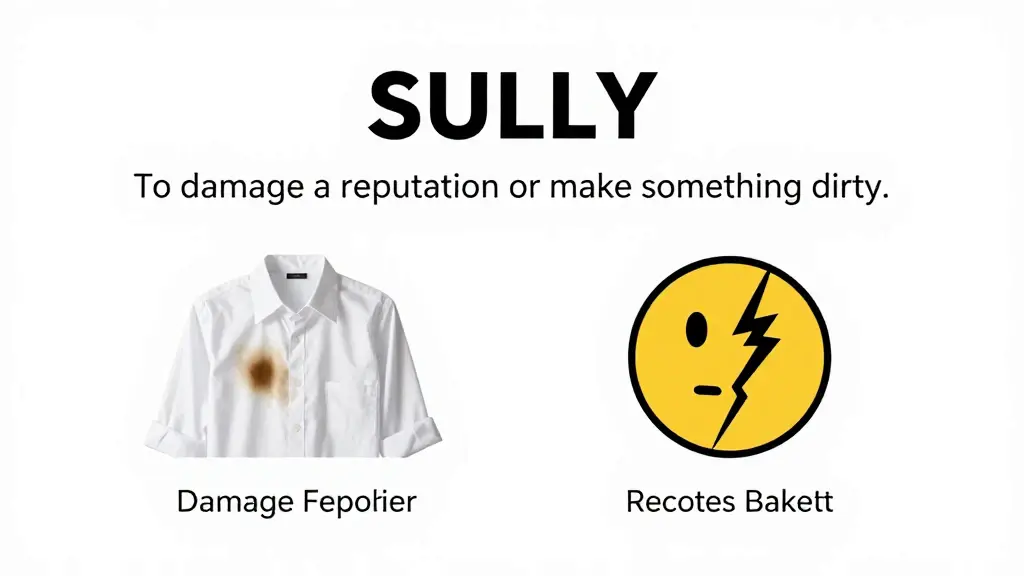
The word sully is used when someone damages, stains, or harms something that was once clean, respected, or good.
The sully meaning is to make something dirty, damage someone’s reputation, or harm the good name of a person or thing.
It can describe physical dirt, but it is more often used in a figurative way to talk about someone’s honor, reputation, or image.
For example, “His dishonest actions sullied his reputation” means his actions damaged the way other people viewed him.
Sully is a useful English word that often appears in books, news reports, formal writing, and everyday conversations.
Although it can refer to physical dirt, it is especially common when discussing trust, respect, and reputation.
Quick Answer
Sully means to stain, damage, or harm something, especially a person’s reputation, honor, or good name. For example, “The scandal sullied his reputation” means the scandal damaged his public image.
Quick Meaning Table
| Feature | Meaning |
| Word | Sully |
| Part of speech | Verb |
| Simple meaning | To stain or damage |
| Common use | Reputation, honor, image, and physical cleanliness |
| Tone | Usually negative |
| Synonyms | Tarnish, stain, damage, disgrace |
| Antonym | Enhance, improve, protect |
| Example | “Don’t sully your good name.” |
1. Sully Meaning in Simple English
In simple English, sully means to make something dirty or damage something good.
The word has two main uses.
Physical meaning: To make something dirty or stained.
Example: “Mud sullied his white shoes.”
This means the mud made his shoes dirty.
Figurative meaning: To damage someone’s reputation, honor, or image.
Example: “The false accusations sullied her name.”
This means the accusations harmed her reputation.
The second meaning is especially common in formal English. People often use sully when talking about honesty, respect, trust, or public image.
For example, someone might say, “I will not sully my reputation by lying.” This means they do not want to damage their good name by being dishonest.
2. Sully Meaning in Texting and Messaging
In texting, sully usually has the same meaning as it does in standard English. It is not a common texting abbreviation or internet slang term.
Someone might use it in a serious message about trust, reputation, or behavior.
For example:
Text: “Don’t sully my name with lies.”
Meaning: Don’t damage my reputation by spreading lies about me.
Another example:
Text: “I won’t sully our friendship over a small argument.”
Meaning: I don’t want to damage our friendship because of a minor disagreement.
Because sully is somewhat formal, people are more likely to use words such as “damage,” “ruin,” or “mess up” in casual messages.
3. Sully Meaning in Slang
Sully is not generally considered a modern slang word. It is a standard English verb that can be used in casual conversations, although it may sound formal or literary.
For example:
“Don’t sully the group chat with rumors.”
This means not to spoil the conversation by spreading rumors.
Another example:
“He tried to sully her name online.”
This means he tried to damage her reputation through online comments or posts.
The word may appear in online discussions about scandals, gossip, arguments, or public criticism. Its exact meaning still depends on the sentence.
4. Sully Meaning in Relationships
In relationships, sully can describe actions that damage trust, respect, or the reputation of a partner.
For example:
“His lies sullied their relationship.”
This means his dishonesty damaged the trust between them.
Another example:
“She refused to sully his name by sharing private details.”
This means she did not want to harm his reputation by revealing personal information.
The word can also appear in discussions about loyalty and respect. However, not every disagreement or mistake sullies a relationship. It is usually used when an action causes meaningful harm to someone’s trust, image, or good name.
5. Sully Meaning on Social Media
On social media platforms such as TikTok, Instagram, Snapchat, and Facebook, sully may be used when someone damages another person’s reputation or makes a public image look bad.
Examples:
“The rumors sullied his reputation.”
Meaning: The rumors damaged the way people viewed him.
“Don’t sully someone’s name without proof.”
Meaning: Don’t harm someone’s reputation by making unsupported claims.
The word may appear in posts about public controversies, online gossip, or accusations.
Sully is not a special social media abbreviation. It is simply a verb that can be used to describe reputational harm.
6. Sully Meaning in Literature and Formal Writing
Sully is often found in novels, historical writing, speeches, and formal articles. Writers use it when they want to express the idea of staining or damaging something valuable.
For example:
“His betrayal sullied the family’s honor.”
This means his betrayal damaged the family’s good name or respect.
Another example:
“Nothing could sully her memory.”
This means nothing could damage the positive way she was remembered.
In literary writing, sully can sound stronger or more expressive than “damage.” It often suggests that something once pure, honorable, or respected has been stained in some way.
7. Sully Meaning in Reputation and Honor
One of the most common uses of sully is in connection with a person’s reputation.
A reputation is the opinion other people have about someone based on their behavior, actions, or achievements.
When someone sullies a reputation, they harm that person’s good name or public image.
Examples:
- “The scandal sullied the politician’s reputation.”
- “He did not want to sully his family’s name.”
- “The false story sullied the athlete’s image.”
- “She refused to sully her honor by cheating.”
In these sentences, sully does not mean making something physically dirty. It means harming something that people value, such as honesty, respect, or trust.
8. Sully vs. Tarnish
Sully and tarnish have similar meanings. Both can refer to staining or damaging something, especially a reputation.
| Word | Meaning | Example |
| Sully | To stain or damage something respected | “The lie sullied his good name.” |
| Tarnish | To damage the shine, quality, or reputation of something | “The scandal tarnished her reputation.” |
Both words can be used figuratively.
Sully often emphasizes staining or spoiling something considered good or honorable. Tarnish can suggest that something once bright, respected, or admired has lost some of its shine.
In many sentences about reputation, the two words can be used in similar ways.
9. Sully vs. Defame
Sully and defame are related, but they are not exactly the same.
Sully means to stain or damage someone’s reputation or something considered good.
Defame means to harm someone’s reputation by making false statements about them.
Examples:
Sully: “His behavior sullied the family’s reputation.”
This means his behavior damaged the family’s good name.
Defame: “She accused the newspaper of trying to defame her.”
This means she accused the newspaper of making claims intended to harm her reputation.
Defame has a more specific connection to statements that harm someone’s reputation. Sully has a broader meaning and can describe damage caused by actions, events, or words.
10. Ten Examples of Sully in Sentences
Here are ten examples showing how to use sully correctly.
1. “He refused to sully his reputation by cheating.”
Meaning: He refused to damage his good name by cheating.
2. “The scandal sullied the company’s image.”
Meaning: The scandal harmed the way people viewed the company.
3. “Mud sullied her clean shoes.”
Meaning: The mud made her shoes dirty.
4. “Don’t sully my name with false accusations.”
Meaning: Don’t damage my reputation by making false claims about me.
5. “His rude behavior sullied the family’s honor.”
Meaning: His behavior harmed the family’s good name.
6. “She worked hard and did not want anything to sully her achievements.”
Meaning: She did not want anything to damage the value or reputation of her achievements.
7. “The rumors threatened to sully the actor’s public image.”
Meaning: The rumors could damage how people viewed the actor.
8. “He would not sully their friendship with unnecessary lies.”
Meaning: He did not want to damage their friendship by lying.
9. “The dirty water sullied the white fabric.”
Meaning: The water stained the fabric.
10. “Nothing could sully the memory of her kindness.”
Meaning: Nothing could damage the positive way people remembered her kindness.
11. Short Conversations Using Sully
Conversation 1: Protecting a Reputation
Ali: Why didn’t you share those rumors about Ahmed?
Usman: I didn’t want to sully his reputation without knowing the truth.
Ali: That makes sense.
Usman: It’s better to check the facts first.
Meaning: Usman did not want to damage Ahmed’s good name by spreading unverified rumors.
Conversation 2: A Work Situation
Sara: The report contains several false claims.
Ayesha: Those claims could sully the company’s reputation.
Sara: We should correct them.
Ayesha: Yes, the information should be accurate.
Meaning: Ayesha believes the false claims could harm the company’s public image.
12. Sully Synonyms and Antonyms
Synonyms of Sully
These words have similar meanings, depending on the context:
- Tarnish — to damage a reputation or reduce something’s good image.
- Stain — to mark or dirty something.
- Defile — to make something dirty or damage its purity.
- Disgrace — to bring shame or loss of respect.
- Damage — to harm something.
- Mar — to spoil or harm the quality of something.
- Besmirch — to damage someone’s reputation or good name.
- Smear — to harm someone’s reputation, often through accusations.
- Contaminate — to make something impure or dirty.
- Dishonor — to cause a loss of honor or respect.
The best synonym depends on the sentence. For physical dirt, “stain” may be appropriate. For reputation, “tarnish” or “besmirch” may fit better.
Antonyms of Sully
Antonyms are words with opposite meanings.
- Clean
- Purify
- Protect
- Preserve
- Improve
- Enhance
- Honor
- Uphold
For example:
Sully: “His actions sullied his reputation.”
Opposite: “His actions enhanced his reputation.”
The first sentence means his actions damaged his good name. The second means his actions improved it.
13. How to Use Sully Correctly
Sully is a verb, so it describes an action. It can be used in different grammatical forms.
| Form | Example |
| Sully | “Don’t sully your reputation.” |
| Sullies | “Dishonesty sullies his good name.” |
| Sullied | “The scandal sullied her image.” |
| Sullying | “He was accused of sullying their reputation.” |
Common expressions include:
- Sully someone’s name: Damage someone’s reputation.
- Sully a reputation: Harm the way people view someone.
- Sully one’s honor: Damage someone’s honor or respect.
- Sully a memory: Harm the positive way someone or something is remembered.
- Sully something clean: Make it dirty or stained.
In everyday conversation, simpler words such as “damage,” “stain,” or “ruin” may sound more natural. Sully is useful when you want a more formal or expressive word.
FAQs:
1. What does sully mean in simple words?
Sully means to make something dirty or damage something good, especially someone’s reputation or honor. For example, “His lies sullied his reputation” means his lies damaged his good name.
2. Is sully a negative word?
Yes, sully usually has a negative meaning. It suggests that something has been stained, spoiled, or damaged. It is often used when talking about a person’s reputation, honor, or public image.
3. What does sully mean in texting?
In texting, sully has the same meaning as in standard English. It can mean damaging someone’s reputation or making something dirty. It is not a common texting abbreviation.
4. What is an example of sully in a sentence?
“The scandal sullied his reputation.” This means the scandal damaged the way people viewed him.
5. What is a synonym for sully?
Common synonyms include tarnish, stain, damage, besmirch, defile, and disgrace. The best synonym depends on whether the sentence refers to physical dirt or damage to a reputation.
6. What is the opposite of sully?
Possible opposites include clean, preserve, protect, honor, uphold, and enhance. For example, “Her actions enhanced her reputation” expresses the opposite of damaging it.
7. What does sully your name mean?
To sully your name means to damage your reputation or make people think less positively of you. Dishonest actions or harmful rumors may be described as sullying someone’s name.
8. What is the difference between sully and tarnish?
Both words can mean damaging a reputation. Sully often suggests staining or spoiling something respected, while tarnish can suggest reducing the shine, quality, or good image of something.
9. Can sully mean making something physically dirty?
Yes. Sully can describe physically dirtying or staining something. For example, “The mud sullied his white trousers” means the mud made them dirty.
10. Is sully a noun or a verb?
Sully is mainly used as a verb. It describes the action of staining or damaging something. Its forms include sullies, sullied, and sullying.
Conclusion:
Sully means to stain, dirty, or damage something, especially a person’s reputation, honor, or good name.
Although it can describe physical dirt, it is often used figuratively in books, news reports, and everyday English.
For example, “The scandal sullied his reputation” means the scandal harmed his public image.
Similar words include tarnish, stain, and besmirch.
Understanding this word can help you express the idea of damaging something respected more clearly and accurately.

Rachel Morgan is a U.S.-based writer who specializes in vocabulary and English expressions. She is interested in the different ways words can be used depending on context. Her articles provide straightforward explanations and realistic examples to help readers better understand everyday language.