
Have you ever wondered how your stomach breaks down the protein in foods like eggs, meat, fish, and beans?
Your body uses special substances to help digest these foods. One important substance is called pepsinogen.
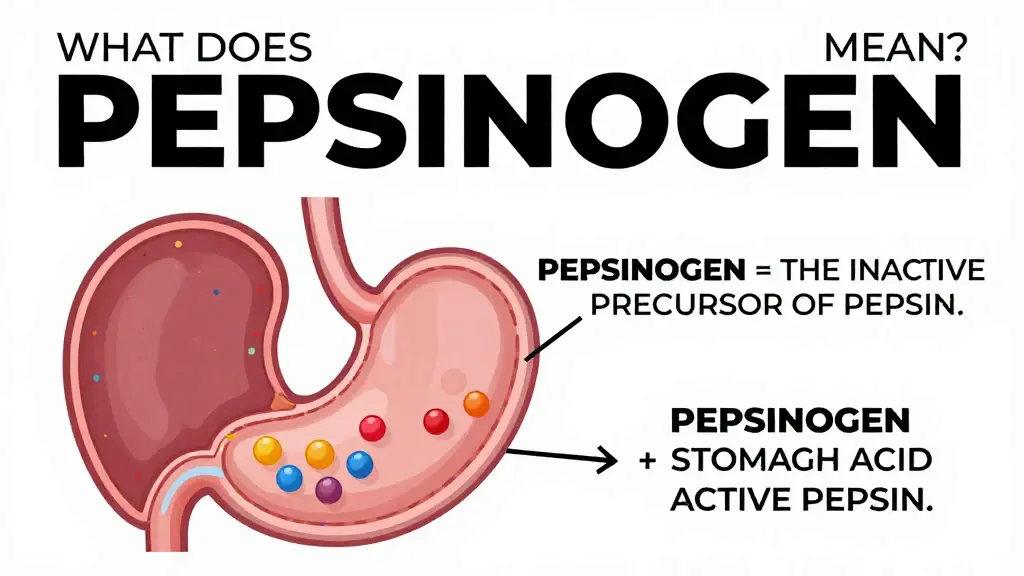
Pepsinogen is an inactive substance made by cells in the stomach that changes into an active digestive enzyme called pepsin.
Pepsin helps break proteins into smaller pieces so the body can continue digesting them.
Pepsinogen is important because it allows the stomach to prepare a protein-digesting enzyme without making it fully active too early.
When pepsinogen enters the acidic environment of the stomach, it is converted into pepsin.
This helps the digestive system break down protein in food.
In this guide, you will learn the pepsinogen meaning in simple English, how it works, where it is produced, how it differs from pepsin, and why it matters in digestion.
Quick Answer
Pepsinogen is an inactive precursor of the digestive enzyme pepsin. It is mainly produced by chief cells in the stomach lining. When exposed to stomach acid, it changes into pepsin, which helps break proteins in food into smaller peptides during digestion.
Quick Meaning Table
| Term | Meaning |
| Term | Pepsinogen |
| Definition | An inactive precursor of pepsin |
| Word type | Noun |
| Pronunciation | pep-SIN-oh-jen |
| Produced by | Mainly chief cells in the stomach lining |
| Function | Changes into pepsin for protein digestion |
| Example | “Pepsinogen becomes pepsin in the stomach.” |
What Does Pepsinogen Mean?
Pepsinogen is a substance made in the stomach that serves as the inactive form of pepsin, an enzyme that digests proteins.
An enzyme is a substance that helps a chemical reaction happen faster. In digestion, enzymes break large food molecules into smaller parts that the body can process.
Pepsinogen itself has little or no protein-digesting activity until it is activated. Stomach acid helps convert it into pepsin. Once active, pepsin begins breaking proteins into smaller chains called peptides.
For example, when you eat an egg, the protein in the egg needs to be broken down during digestion. Pepsin helps start this process in the stomach.
In simple terms, pepsinogen is the inactive starting form, while pepsin is the active enzyme.
Pepsinogen Meaning in Simple Words
In simple words, pepsinogen is an inactive substance that the stomach turns into a protein-digesting enzyme.
Think of it as a tool that is made before it is switched on.
- Pepsinogen is the inactive form.
- Stomach acid helps activate it.
- Pepsin is the active enzyme.
- Pepsin helps break down protein in food.
This process helps the stomach digest protein while limiting the activity of the enzyme before it is needed.
How Is Pepsinogen Produced?
Pepsinogen is produced mainly by special cells called chief cells in the stomach lining.
These cells release pepsinogen into the stomach, where the acidic conditions help convert it into pepsin.
The stomach also produces hydrochloric acid. This acid creates the low-pH environment needed for pepsinogen activation and helps pepsin work properly.
The production and release of pepsinogen are controlled by signals in the body, including those linked to eating and digestion.
What Is the Function of Pepsinogen?
The main function of pepsinogen is to provide the inactive starting form of pepsin.
Its role supports protein digestion in several ways.
1. It Provides the Starting Form of Pepsin
Pepsinogen is converted into pepsin when it comes into contact with the acidic environment of the stomach.
2. It Supports Protein Digestion
Once pepsinogen becomes pepsin, the active enzyme breaks proteins into smaller peptide chains.
3. It Helps Control Enzyme Activity
Making pepsin in an inactive form helps reduce unwanted protein-digesting activity before the substance reaches the proper environment in the stomach.
4. It Works With Stomach Acid
Pepsinogen needs suitable acidic conditions for activation. Stomach acid also supports the digestive action of pepsin.
Together, these processes help the stomach begin breaking down protein-rich foods.
How Does Pepsinogen Change Into Pepsin?
Pepsinogen changes into pepsin through a process called activation.
Here is the basic process:
- Chief cells in the stomach lining release pepsinogen.
- Pepsinogen enters the stomach.
- Hydrochloric acid creates an acidic environment.
- Pepsinogen is converted into active pepsin.
- Pepsin breaks proteins into smaller peptides.
Once some pepsin has formed, it can also help activate additional pepsinogen molecules.
This process allows the stomach to begin protein digestion when the conditions are suitable.
Pepsinogen vs. Pepsin
Pepsinogen and pepsin are closely related, but they are not the same thing.
| Feature | Pepsinogen | Pepsin |
| Form | Inactive precursor | Active enzyme |
| Main role | Becomes pepsin | Digests proteins |
| Produced or formed | Released mainly by stomach chief cells | Formed from pepsinogen |
| Activity | Does not significantly digest protein before activation | Breaks proteins into smaller peptides |
| Activation | Activated by acidic conditions and pepsin | Already active under suitable stomach conditions |
The easiest way to remember the difference is that pepsinogen becomes pepsin, and pepsin digests protein.
Where Is Pepsinogen Found?
Pepsinogen is mainly produced by chief cells in the stomach lining. It is released into the stomach, where it can be activated.
Small amounts may also enter the bloodstream. Doctors can measure pepsinogen levels in blood tests in certain medical situations.
The stomach is its main site of production for normal digestion, and its role is closely linked to the stomach’s acidic environment.
How to Pronounce Pepsinogen
Pepsinogen is pronounced pep-SIN-oh-jen.
It has four syllables:
- Pep
- Sin
- O
- Gen
The main stress falls on the second syllable, “SIN.”
The word is a noun used in biology, medicine, and discussions about digestion.
Origin of the Word Pepsinogen
The word pepsinogen combines pepsin, the protein-digesting enzyme, with the suffix -gen, which can indicate something that produces or gives rise to another substance.
The name reflects its role as the precursor that gives rise to pepsin.
This naming pattern is common in biology, where a substance’s name may describe its relationship to another molecule.
Pepsinogen Examples in Sentences
Here are 10 examples showing how to use the word naturally.
- “Pepsinogen is released by chief cells in the stomach.”
- “Stomach acid helps convert pepsinogen into pepsin.”
- “Pepsinogen is the inactive precursor of pepsin.”
- “Pepsinogen plays an important role in protein digestion.”
- “The biology teacher explained how pepsinogen becomes active.”
- “Pepsinogen is produced in the lining of the stomach.”
- “The stomach’s acidic environment helps activate pepsinogen.”
- “Pepsinogen itself does not digest proteins like active pepsin does.”
- “Scientists can measure pepsinogen levels in blood samples.”
- “Pepsinogen helps prepare the digestive system for protein breakdown.”
Conversation Examples
Conversation 1: Biology Class
Ali: What is pepsinogen?
Hamza: It is the inactive form of pepsin.
Ali: What makes it active?
Hamza: The acidic environment in the stomach helps change it into pepsin.
Conversation 2: Learning About Digestion
Sara: Does pepsinogen break down protein?
Mina: Not significantly while it is inactive.
Sara: So what does pepsin do?
Mina: Pepsin breaks proteins into smaller peptide chains.
Synonyms and Related Terms
Pepsinogen does not have an exact everyday synonym, but several related biological terms help explain it.
| Term | Meaning | Difference |
| Pepsin | An enzyme that breaks down proteins | The active form produced from pepsinogen |
| Zymogen | An inactive precursor of an enzyme | A general term for substances such as pepsinogen |
| Enzyme | A substance that speeds up a chemical reaction | A broad category that includes pepsin |
| Hydrochloric acid | The acid produced in the stomach | Helps create the conditions needed to activate pepsinogen |
| Peptide | A short chain of amino acids | One type of product formed when proteins are broken down |
These terms are connected, but they are not interchangeable.
Common Confusions
Pepsinogen vs. Pepsin
Pepsinogen is inactive, while pepsin is the active enzyme that digests proteins.
Pepsinogen vs. Trypsinogen
Both are inactive enzyme precursors. Pepsinogen is activated in the acidic stomach environment to form pepsin. Trypsinogen is released by the pancreas and activated in the small intestine to form trypsin.
Pepsinogen vs. Hydrochloric Acid
Pepsinogen is an enzyme precursor, while hydrochloric acid is the acid in the stomach. The acid helps activate pepsinogen and supports pepsin’s function.
Pepsinogen vs. Protein
Pepsinogen is a protein-based enzyme precursor, but it is not the same as the dietary proteins that the stomach digests. It has a specific role in the digestive process.
FAQs:
1. What does pepsinogen mean in simple words?
Pepsinogen is an inactive substance made in the stomach. It changes into pepsin when conditions are suitable. Pepsin then helps break down proteins in food into smaller pieces during digestion.
2. What is the main function of pepsinogen?
Its main function is to serve as the inactive precursor of pepsin. Once activated in the stomach, pepsin helps digest proteins into smaller peptide chains that can be broken down further by the digestive system.
3. Where is pepsinogen produced?
Pepsinogen is produced mainly by chief cells in the lining of the stomach. These cells release it into the stomach, where the acidic environment helps activate it and begin the process of protein digestion.
4. What activates pepsinogen?
The acidic environment of the stomach helps activate pepsinogen into pepsin. Once some pepsin forms, it can also help activate more pepsinogen. This process supports efficient protein digestion in the stomach.
5. What is the difference between pepsinogen and pepsin?
Pepsinogen is the inactive precursor, while pepsin is the active protein-digesting enzyme. Pepsinogen is released by stomach cells and becomes pepsin in the acidic stomach environment.
6. Is pepsinogen an enzyme?
Pepsinogen is an inactive precursor of an enzyme rather than the fully active form of pepsin. It has little or no protein-digesting activity before activation. After conversion, pepsin acts as the active enzyme.
7. Why is pepsinogen released in an inactive form?
Releasing pepsinogen in an inactive form helps control when protein-digesting activity begins. This reduces the risk of unwanted enzyme activity before the substance reaches the proper acidic environment in the stomach.
8. Does pepsinogen help digest protein?
Pepsinogen supports protein digestion because it becomes pepsin, which breaks proteins into smaller peptides. It is an important part of the stomach’s digestive process, although other enzymes are needed to complete protein digestion.
9. Can pepsinogen be measured in a blood test?
Yes. Pepsinogen levels can be measured in blood tests in certain medical settings. Doctors may use these results alongside other information to assess aspects of stomach health. A result alone does not establish a diagnosis.
10. How do you pronounce pepsinogen?
Pepsinogen is pronounced pep-SIN-oh-jen, with the main stress on the second syllable. It is a biological term commonly used when discussing the stomach, digestive enzymes, and protein breakdown.
Conclusion:
Pepsinogen is an inactive precursor produced mainly by chief cells in the stomach lining.
When it enters the acidic environment of the stomach, it changes into pepsin, an enzyme that breaks proteins into smaller peptides.
This process helps the body begin digesting protein-rich foods.
The key difference is simple: pepsinogen is the inactive starting form, while pepsin is the active digestive enzyme.
Understanding this relationship makes it easier to learn how the stomach works and how the body processes food.

Brian Mitchell is an American writer focused on English language usage and vocabulary. He produces educational content covering definitions, phrases, terminology, and common expressions. His writing emphasizes practical information and clear examples that readers can easily apply to everyday communication.