
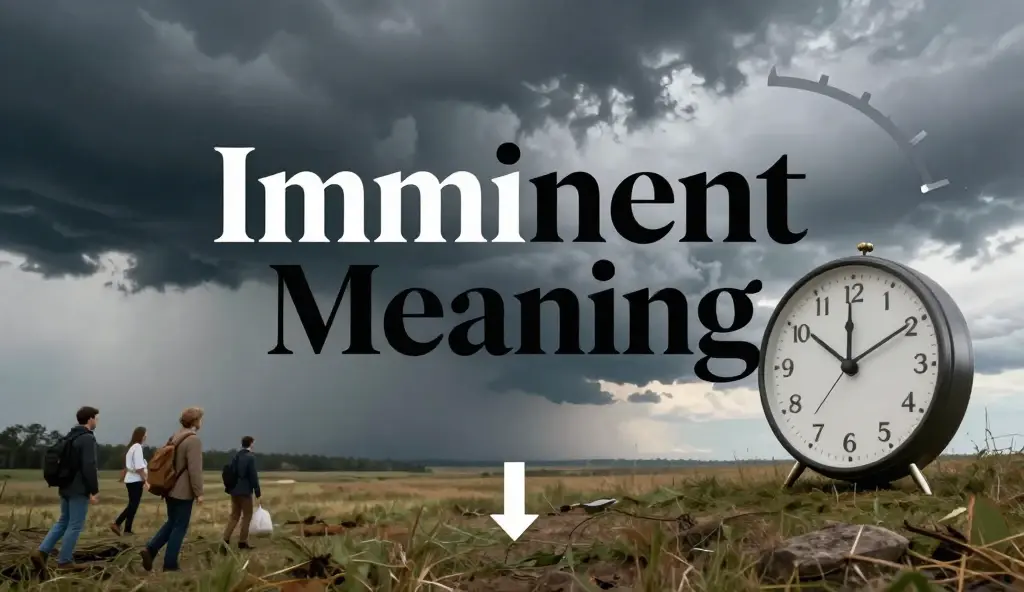
The word imminent is commonly used in news reports, warnings, conversations, and formal writing.
Many people search for the imminent meaning because it describes something that is expected to happen soon, but it can sometimes be confused with similar words like “eminent” or “immanent.”
Imminent means something that is about to happen very soon or is likely to occur in the near future.
It is often used for events that are approaching quickly, such as changes, decisions, dangers, or important moments.
This article explains the imminent meaning, pronunciation, examples, synonyms, and how to use this word correctly.
Quick Answer
Imminent means about to happen soon or likely to occur very soon. It describes something that is close to happening.
Quick Meaning Table
| Term | Imminent |
| Meaning | About to happen soon |
| Part of Speech | Adjective |
| Pronunciation | IM-uh-nent |
| Origin | Latin |
| Common Usage | Events, warnings, changes, situations |
| Example | “A storm is imminent.” |
What Does Imminent Mean?
Imminent describes something that is expected to happen very soon.
Examples:
- “The arrival of the train is imminent.”
Meaning: The train will arrive soon. - “A decision is imminent.”
Meaning: A decision is expected soon.
The word usually suggests that there is little time before something happens.
Imminent Meaning in Simple Words
In simple English:
Imminent means something is coming soon.
It can describe:
- An upcoming event
- A near future action
- A situation that is about to occur
Different Meanings of Imminent
Imminent Danger Meaning
The word is often used for possible risks or threats.
Example:
“The area was evacuated because of imminent danger.”
Meaning:
The danger was expected to happen soon.
Imminent Change Meaning
It can describe changes that are expected shortly.
Example:
“The company announced imminent changes.”
Meaning:
The changes will happen soon.
Imminent Arrival Meaning
It can describe someone or something that is about to arrive.
Example:
“The guest’s arrival is imminent.”
Meaning:
The guest will arrive very soon.
Imminent Meaning in Texting
In texting, imminent is not common slang, but people may use it in serious conversations.
Examples:
- “The exam is imminent.”
- “The deadline is imminent.”
Meaning:
The event is coming soon.
Imminent Meaning on Social Media
On platforms like:
- TikTok
- X
people may use imminent when discussing upcoming events.
Examples:
- “The update is imminent.”
- “A new announcement is imminent.”
Meaning:
Something is expected soon.
Imminent vs. Eminent vs. Immanent
These three words sound similar but have different meanings.
| Word | Meaning | Example |
| Imminent | About to happen | “A storm is imminent.” |
| Eminent | Famous or respected | “She is an eminent scientist.” |
| Immanent | Existing within something | “A spiritual force is immanent.” |
How to Pronounce Imminent
Pronunciation:
IM-uh-nent
Breakdown:
- IM
- uh
- nent
The stress is on the first syllable.
Origin of Imminent
The word imminent comes from the Latin word imminere, meaning to overhang or threaten.
Over time, it developed the meaning of something hanging close or about to happen.
How to Use Imminent in a Sentence
Examples:
- The storm is imminent.
- A major announcement is imminent.
- The deadline is imminent.
- The team prepared for the imminent changes.
- The arrival of the package is imminent.
- Experts warned of imminent risks.
- The meeting’s start is imminent.
- The company expects an imminent update.
- The danger was considered imminent.
- A solution to the problem may be imminent.
Conversation Examples
Conversation 1
Emma: When will the new update arrive?
Sarah: It is imminent. It should come soon.
Conversation 2
Ali: Why is everyone preparing?
Ahmed: Because a big event is imminent.
Synonyms and Similar Words
| Word | Difference |
| Upcoming | Going to happen soon |
| Near | Close in time |
| Approaching | Coming closer |
| Pending | Waiting to happen |
| Forthcoming | Expected in the future |
Common Confusions
Imminent vs. Immediate
Imminent means something will happen soon.
Immediate means something happens right now or without delay.
Example:
- “A storm is imminent.” → Coming soon.
- “Immediate action is needed.” → Action is needed now.
Imminent vs. Upcoming
Both mean something is coming.
However:
- Upcoming is more general.
- Imminent suggests it is very close.
Imminent vs. Permanent
They are not opposites.
Imminent describes timing, while permanent describes duration.
Is Imminent Positive or Negative?
Imminent is neutral.
It depends on the event:
Positive:
- “Imminent success”
- “Imminent arrival”
Negative:
- “Imminent danger”
- “Imminent crisis”
FAQs:
Q1. What does imminent really mean?
Imminent means something is about to happen soon or is very close to occurring.
Q2. Is imminent a negative word?
No. It can describe both positive and negative events depending on the context.
Q3. What is an example of imminent?
“The storm is imminent” means the storm is expected soon.
Q4. What is the opposite of imminent?
The opposite can be words like distant, unlikely, or far away.
Q5. How do you pronounce imminent?
Imminent is pronounced IM-uh-nent.
Q6. What is another word for imminent?
Similar words include upcoming, approaching, near, and pending.
Q7. Does imminent mean certain?
Not always. It means something is expected soon, but it may not always happen.
Q8. Is imminent the same as immediate?
No. Imminent means soon, while immediate means right now.
Q9. Can imminent be used for people?
Yes. Example: “The player’s return is imminent.”
Q10. What does imminent future mean?
It means the very near future.
Conclusion:
The imminent meaning is something that is about to happen very soon.
It is commonly used for upcoming events, changes, warnings, and situations that are close to occurring.
Understanding the difference between imminent, eminent, and immanent helps you use this word correctly in English.

Professional Language Consultant with expertise in vocabulary building and academic writing resources.