
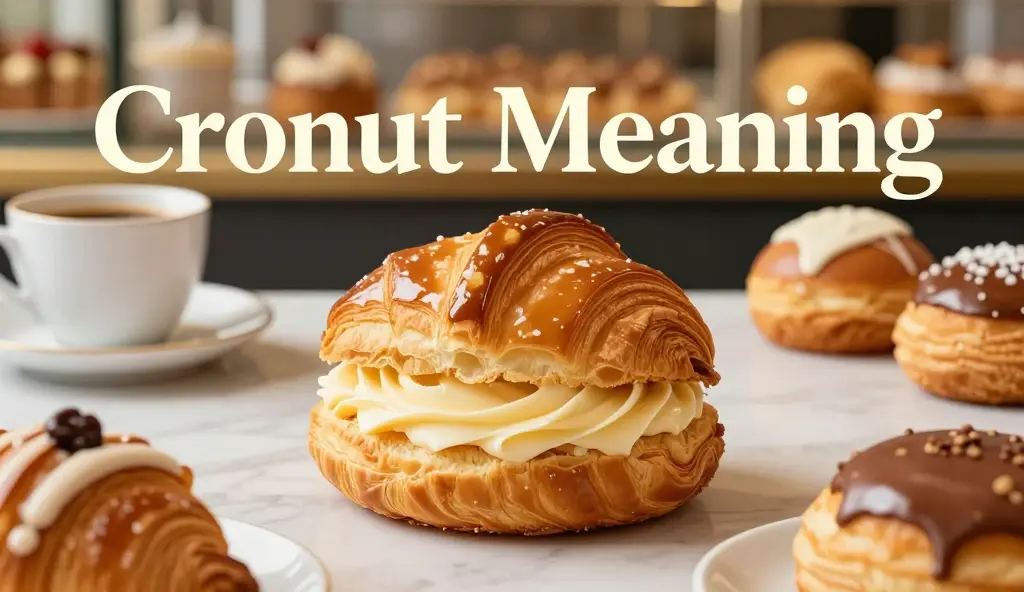
What does cronut mean?
A cronut is a pastry that combines features of a croissant and a doughnut.
The name cronut is a blend of the words “croissant” and “doughnut.”
The pastry became widely known after pastry chef Dominique Ansel introduced it at his bakery in New York City in 2013.
It quickly attracted attention and inspired many similar pastries.
Today, people use the word cronut both for the specific pastry associated with the original creation and more generally for croissant-doughnut-style pastries.
If you see “cronut” on a bakery menu, expect something flaky and layered like a croissant but fried and shaped more like a doughnut.
Quick Answer
The name “cronut” combines croissant + doughnut.
Quick Meaning Table
| Term | Main Meaning | Word Type | Pronunciation | Usage | Example |
| Cronut | A croissant-doughnut hybrid pastry | Trademarked noun (portmanteau) | KROH-nuht | Food, bakeries, menus, everyday speech | “We waited in line for an hour to try a cronut.” |
What Does Cronut Mean?
Cronut refers to a specific pastry that blends the flaky, buttery layers of a croissant with the shape and frying method of a doughnut.
Technically, “Cronut” is a registered trademark specific to Dominique Ansel Bakery’s original recipe. Other bakeries selling similar croissant-doughnut hybrids often use different names, like “croissant-donut” or other invented terms, to avoid trademark issues.
Cronut Meaning in Simple Words
Think of it as croissant dough shaped and cooked the way a doughnut would be — combining two familiar pastries into one.
Origin of the Cronut
It quickly became a viral sensation, with long lines forming outside the bakery and resale prices reaching far above the original cost. Dominique Ansel Bakery trademarked the name “Cronut” soon after its debut, meaning other bakeries legally cannot use the exact name “Cronut” for their own similar pastries.
The original recipe remains closely guarded, and Dominique Ansel Bakery continues to release limited monthly flavors of the pastry.
Is “Cronut” a Trademarked Word?
Yes. Because of this, other bakeries selling similar croissant-doughnut pastries typically use alternate names, such as “croissant-doughnut,” “doissant,” or other invented terms, to legally avoid using the trademarked name for their own products.
This is similar to how brand names like “Kleenex” or “Jacuzzi” are trademarks that people sometimes use informally to describe similar generic products, even though the trademark technically applies only to the original brand.
How to Pronounce Cronut
Cronut is pronounced “KROH-nuht,” with the stress on the first syllable, blending the sounds of “croissant” and “doughnut.”
How to Use Cronut in a Sentence
- “The bakery sells out of cronuts within an hour every morning.”
- “We tried the original cronut on our trip to New York.”
- “This month’s cronut flavor is lemon and blueberry.”
- “People used to wait in line for hours just to buy a cronut.”
- “The recipe for a cronut takes several days to prepare properly.”
- “She brought a box of cronuts to the office as a treat.”
- “Some bakeries sell a similar pastry but can’t legally call it a cronut.”
- “The cronut trend inspired a wave of hybrid pastries afterward.”
- “He said the cronut tasted like a cross between a croissant and a jelly doughnut.”
- “Our local bakery makes a cronut-style pastry under a different name.”
Similar Hybrid Pastries and Related Terms
The cronut’s popularity inspired a wave of similar hybrid pastries, often using different names due to trademark restrictions.
- Croissant-doughnut/doissant: Generic terms used by other bakeries for similar croissant-doughnut hybrids
- Cruffin: A different hybrid pastry combining croissant dough with a muffin shape, rather than a doughnut shape
- Duffin: A hybrid combining doughnut and muffin, unrelated to croissant dough
- Townie: A hybrid combining tart and brownie, part of the same broader trend of pastry mashups
These hybrid pastry names generally follow the same portmanteau naming pattern as “cronut” itself.
Common Confusions
- Cronut vs. croissant-doughnut: These refer to the same basic concept, but “cronut” specifically refers to the trademarked original recipe, while “croissant-doughnut” is the generic term used elsewhere.
- Cronut vs. cruffin: A cruffin uses croissant dough shaped like a muffin, not fried like a doughnut, making it a different pastry entirely.
- Cronut vs. any flaky fried pastry: Not every flaky, fried pastry is technically a cronut — the term specifically originated from Dominique Ansel’s specific recipe and trademark.
FAQs:
What is a cronut made of?
A cronut is made from laminated croissant dough, shaped like a doughnut, fried, and typically filled with flavored cream and finished with a glaze.
Who invented the cronut?
Pastry chef Dominique Ansel invented the cronut at his bakery in New York City, first selling it to the public in May 2013.
Is “cronut” a trademarked name?
} Yes. “Cronut” is a registered trademark owned by Dominique Ansel Bakery, meaning other bakeries cannot legally use the exact name for their own similar pastries.
What do other bakeries call their version of a cronut?
Many use alternate names like “croissant-doughnut” or other invented terms to describe similar pastries without using the trademarked “cronut” name.
How do you pronounce cronut?
Cronut is pronounced “KROH-nuht,” blending the sounds of “croissant” and “doughnut.”
Is a cronut the same as a croissant-doughnut?
They refer to the same general concept, but “cronut” specifically refers to Dominique Ansel Bakery’s original trademarked recipe.
What’s the difference between a cronut and a cruffin?
A cronut is fried and shaped like a doughnut, while a cruffin uses croissant dough baked in a muffin shape, making them different pastries.
Why did the cronut become so popular?
Its 2013 debut caused a viral sensation, with long lines and high resale prices, largely due to its novelty and the reputation of its creator, Dominique Ansel.
Can you buy the original cronut outside of New York?
Dominique Ansel Bakery has expanded to a few other locations over the years, though availability of the original cronut varies by location.
What does “cronut” mean as a word?
It’s a portmanteau, blending “croissant” and “doughnut” to describe the hybrid pastry that combines both.
Conclusion:
A cronut is a croissant-doughnut hybrid pastry invented by chef Dominique Ansel in 2013, and the name itself is a trademarked term specific to his original recipe.
While other bakeries sell similar pastries under different names, “cronut” specifically refers to Ansel’s original creation, which quickly became a global pastry trend after its debut.

Educational Writer committed to helping readers improve their English through simple, well-researched content.