
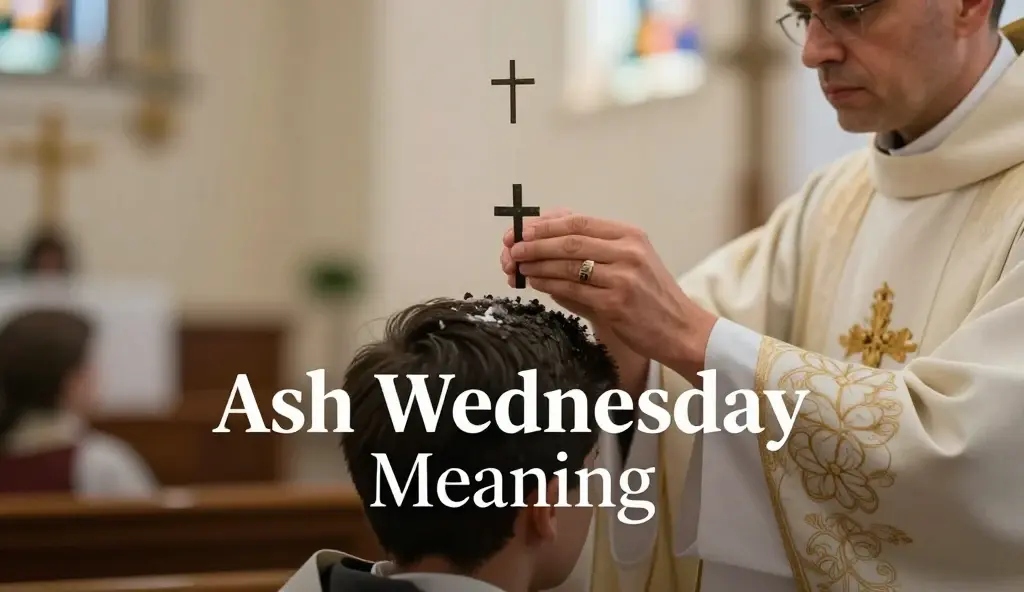
What does Ash Wednesday mean? Ash Wednesday is the first day of Lent in Western Christian traditions and marks the beginning of a period of prayer, repentance, fasting, and reflection leading up to Easter.
On this day, many Christians attend a church service where a priest or minister places ashes on their forehead, often in the shape of a cross.
The ashes are a reminder of human mortality and the need for repentance.
They also symbolize humility and a return to God.
Ash Wednesday is observed 46 calendar days before Easter Sunday, although Lent is traditionally counted as 40 days because Sundays are not included in the fasting period.
The date changes each year because Easter falls on a different date each year.
Quick Answer
Ash Wednesday is the Christian day that begins Lent, a season of repentance, prayer, fasting, and preparation for Easter. Many Christians receive ashes on their foreheads as a reminder of mortality, repentance, and faith. It occurs 46 days before Easter Sunday, with Sundays excluded from the traditional 40-day Lenten fast.
Quick Meaning Table
| Term | Main meaning | Full form, if relevant | Pronunciation | Usage | Example |
| Ash Wednesday | First day of Lent in Western Christianity | Not an abbreviation | ASH WENZ-day | Christian worship and tradition | “Ash Wednesday begins Lent.” |
What Does Ash Wednesday Mean?
Ash Wednesday marks the beginning of Lent for many Western Christians.
Lent is a period of preparation for Easter, when Christians celebrate the resurrection of Jesus Christ.
Ash Wednesday focuses on:
- Repentance
- Prayer
- Fasting
- Humility
- Reflection
- Spiritual preparation
The ashes placed on a person’s forehead are a visible reminder that human life is temporary and that Christians are called to turn toward God.
Ash Wednesday Meaning in Simple Words
In simple English:
Ash Wednesday is a day when many Christians begin Lent by praying, reflecting, and turning their hearts toward God.
The ashes are a symbol of mortality and repentance.
You may hear a minister say words connected with the biblical idea:
“Remember that you are dust, and to dust you shall return.”
Another traditional formula calls people to repent and believe the gospel.
Why Is It Called Ash Wednesday?
It is called Ash Wednesday because ashes are traditionally used during worship on this day.
A priest, minister, or other authorized church leader may place ashes on a person’s forehead, often making the sign of a cross.
The ashes are commonly made from palm branches from the previous year’s Palm Sunday, although practices can vary between churches.
What Do the Ashes Symbolize?
The ashes have several connected meanings.
1. Mortality
Ashes remind Christians that human life is temporary.
The biblical image of returning to dust is closely connected with this idea.
2. Repentance
Ashes can symbolize sorrow for sin and a desire to change one’s life.
3. Humility
The ashes remind people that they are human and dependent on God.
4. Spiritual Renewal
Ash Wednesday begins a season in which Christians may examine their lives and seek spiritual growth.
Ash Wednesday and Lent
Ash Wednesday begins Lent.
Lent is traditionally described as a 40-day period of fasting and spiritual preparation before Easter.
The number 40 has biblical significance and is associated with periods of testing, preparation, and spiritual discipline.
Because Sundays are not traditionally counted as fasting days in the same way, the period from Ash Wednesday to Easter Sunday covers 46 calendar days.
What Do Christians Do on Ash Wednesday?
Practices vary among Christian denominations and individual churches, but common activities include:
- Attending church
- Receiving ashes
- Praying
- Fasting
- Giving something up for Lent
- Confessing or reflecting on sin
- Reading the Bible
- Giving to people in need
- Preparing spiritually for Easter
Not every Christian observes Ash Wednesday, and practices can differ significantly between denominations.
Is Ash Wednesday a Holy Day?
Ash Wednesday is an important day in many Christian traditions, but it is not universally treated as a holy day of obligation.
For example, the Catholic Church considers Ash Wednesday a significant day of fasting and abstinence, but it is not one of the Catholic Church’s holy days of obligation.
Other Christian denominations may have different practices.
Ash Wednesday Meaning in Christianity
Ash Wednesday is closely connected with the Christian ideas of repentance and reconciliation with God.
The day encourages believers to reflect on their lives and prepare spiritually for Easter.
It is not meant to be only about receiving ashes.
The ashes are an outward sign of an inward spiritual practice involving:
Repentance, humility, prayer, and preparation.
Why Do People Put Ashes on Their Forehead?
The ashes are placed on the forehead as a public symbol of faith and repentance.
The minister may make a cross with the ashes.
Some people leave the ashes visible throughout the day, while others remove them later.
Wearing ashes is not simply a fashion or cultural tradition. For Christians who observe Ash Wednesday, it can serve as a reminder of their commitment to Lent.
Do You Have to Get Ashes on Ash Wednesday?
No.
Receiving ashes is a tradition, not something every Christian must do.
Some Christians observe Ash Wednesday without receiving ashes, while others do not observe the day at all.
Practices vary by denomination, church, and personal belief.
Can Anyone Receive Ashes?
Practices vary between churches.
Many churches welcome anyone who wishes to receive ashes, including visitors and people who are exploring Christianity.
Other churches may have particular practices or instructions.
If you are unsure, you can ask the church or minister before the service.
Ash Wednesday Meaning in Catholicism
In the Catholic Church, Ash Wednesday begins the Lenten season.
It is traditionally a day of:
- Fasting
- Abstinence
- Prayer
- Repentance
Catholics who meet the applicable age and health requirements follow specific fasting and abstinence rules.
The ashes are placed on the forehead as a sign of repentance and mortality.
Ash Wednesday Meaning in Protestant Christianity
Many Protestant churches also observe Ash Wednesday, particularly churches in traditions such as:
- Anglican/Episcopal
- Lutheran
- Methodist
- Presbyterian
- Other liturgical Protestant traditions
However, not every Protestant church observes it.
The emphasis may include repentance, prayer, reflection, and preparation for Easter.
Ash Wednesday vs. Good Friday
These two days are sometimes confused.
Ash Wednesday
Marks the beginning of Lent.
It focuses on:
- Repentance
- Mortality
- Fasting
- Spiritual preparation
Good Friday
Commemorates the crucifixion of Jesus.
It occurs near the end of Lent and immediately before Easter Sunday.
So, Ash Wednesday begins the season of preparation, while Good Friday focuses on the crucifixion.
Ash Wednesday vs. Easter
Ash Wednesday and Easter have very different purposes.
Ash Wednesday begins a solemn period of repentance and preparation.
Easter Sunday celebrates the resurrection of Jesus Christ.
The two days are connected because Lent prepares Christians for the events of Holy Week and Easter.
How Is Ash Wednesday Calculated?
Ash Wednesday does not have a fixed date.
Its date depends on the date of Easter Sunday, which changes each year.
Ash Wednesday falls 46 calendar days before Easter Sunday.
The traditional Lenten fast is counted as 40 days because the Sundays during Lent are not included in the same way.
Origin of Ash Wednesday
The exact beginning of the modern Ash Wednesday observance developed over the early centuries of Christianity as the Church’s practices surrounding Lent and repentance became more established.
The use of ashes has older biblical associations with repentance, mourning, and humility.
The practice of beginning Lent with ashes became established in Western Christianity over time.
It is therefore better to understand Ash Wednesday as the result of a long development of Christian Lenten practices rather than as a tradition created at one exact moment.
How to Use Ash Wednesday in a Sentence
Here are 10 natural examples:
- “Ash Wednesday marks the beginning of Lent.”
- “Our church holds a service on Ash Wednesday.”
- “She received ashes on Ash Wednesday.”
- “Ash Wednesday is a day of reflection and repentance.”
- “Many Christians fast on Ash Wednesday.”
- “The date of Ash Wednesday changes every year.”
- “We attended an Ash Wednesday service.”
- “Ash Wednesday comes before the season of Lent.”
- “The ashes are placed on the forehead.”
- “He observes Ash Wednesday as part of his Lenten tradition.”
Conversation Examples
Conversation 1
Alex: Why does your church put ashes on people’s foreheads?
Sam: It’s Ash Wednesday. The ashes remind us of our mortality and repentance.
Alex: And does it start Lent?
Sam: Yes, Ash Wednesday begins Lent.
Conversation 2
Emma: When is Ash Wednesday this year?
Liam: It changes every year because its date depends on Easter.
Emma: What do people usually do?
Liam: Many attend church, receive ashes, pray, and begin their Lenten observance.
Synonyms and Similar Terms
Ash Wednesday does not have a true synonym because it is the name of a specific Christian observance.
Related terms include:
Lent
The season that begins on Ash Wednesday in many Western Christian traditions.
Repentance
Turning away from sin and seeking to change one’s life.
Fasting
Going without certain foods or meals as a spiritual practice.
Holy Week
The week leading up to Easter, including Good Friday.
Good Friday
The day commemorating the crucifixion of Jesus.
Easter Sunday
The Christian celebration of Jesus’ resurrection.
Common Confusions
Ash Wednesday vs. Lent
Ash Wednesday is the first day of Lent.
Lent is the whole season leading up to Easter.
Ash Wednesday vs. Good Friday
Ash Wednesday begins Lent.
Good Friday occurs near the end of Lent and commemorates Jesus’ crucifixion.
Ash Wednesday vs. Easter
Ash Wednesday is a solemn day of repentance and preparation.
Easter is a celebration of Jesus’ resurrection.
Is Ash Wednesday Always on a Wednesday?
Yes.
Its date changes each year, but it always falls on a Wednesday.
Is Ash Wednesday a Sad Day?
Ash Wednesday has a solemn and reflective tone, but it is not simply a day of sadness.
It focuses on repentance, humility, and mortality while also beginning the journey toward Easter.
For many Christians, it is a meaningful opportunity for spiritual renewal and preparation.
FAQs:
1. What does Ash Wednesday mean?
Ash Wednesday marks the beginning of Lent in many Western Christian traditions. It is a day focused on repentance, prayer, fasting, humility, and preparation for Easter. The ashes placed on the forehead symbolize mortality and repentance.
2. Why do Christians put ashes on their foreheads?
The ashes symbolize mortality, repentance, and humility. They are often placed on the forehead in the shape of a cross. The practice serves as a visible reminder of the spiritual purpose of Lent.
3. What does Ash Wednesday mark?
Ash Wednesday marks the beginning of Lent. Lent is traditionally a 40-day period of prayer, fasting, repentance, and preparation for Easter, with Sundays excluded from the traditional fasting count.
4. What do the ashes symbolize?
The ashes commonly symbolize human mortality, repentance, humility, and a desire to turn toward God. They are an outward sign of an inward spiritual practice during the Lenten season.
5. Is Ash Wednesday in the Bible?
The Bible does not specifically command Christians to observe “Ash Wednesday.” However, ashes are used in biblical passages as symbols of mourning, repentance, and humility. The Christian observance developed later as part of the tradition of Lent.
6. Can non-Christians receive ashes?
Practices vary by church. Some churches welcome anyone who wishes to receive ashes, while others may have specific customs. If you are unsure, it is best to ask the church or minister before the service.
7. Is Ash Wednesday a Catholic holiday?
Ash Wednesday is an important observance in the Catholic Church and begins Lent. Catholics traditionally observe the day with practices including fasting, abstinence, prayer, and receiving ashes.
8. Why does Ash Wednesday change dates?
Ash Wednesday changes dates because it is calculated from Easter Sunday, whose date changes each year. Ash Wednesday falls 46 calendar days before Easter Sunday.
9. Can you eat meat on Ash Wednesday?
For Catholics who are required to follow the Church’s fasting and abstinence rules, Ash Wednesday is traditionally a day of fasting and abstinence from meat. Specific obligations depend on age and other circumstances.
10. What happens after Ash Wednesday?
Lent continues after Ash Wednesday and leads toward Holy Week and Easter. Christians may continue practices such as prayer, fasting, repentance, giving, and spiritual reflection until the Easter celebration.
Conclusion:
Ash Wednesday is the first day of Lent in many Western Christian traditions and is a time for repentance, prayer, fasting, humility, and spiritual reflection.
The ashes placed on the forehead remind Christians of human mortality and the need to turn toward God.
While practices vary between denominations, the day generally begins a period of preparation for Easter.
Ash Wednesday does not have a fixed calendar date because its timing is connected to Easter.

Senior Content Editor producing trusted educational materials for students, professionals, and language learners.