
Have you ever heard someone say, “Don’t become complacent” after achieving success?
The word complacent is often used in workplaces, schools, sports, and everyday conversations to describe someone who becomes too comfortable or satisfied with their current situation.
While feeling satisfied can be positive, being complacent usually suggests that a person has stopped trying to improve or prepare for future challenges.
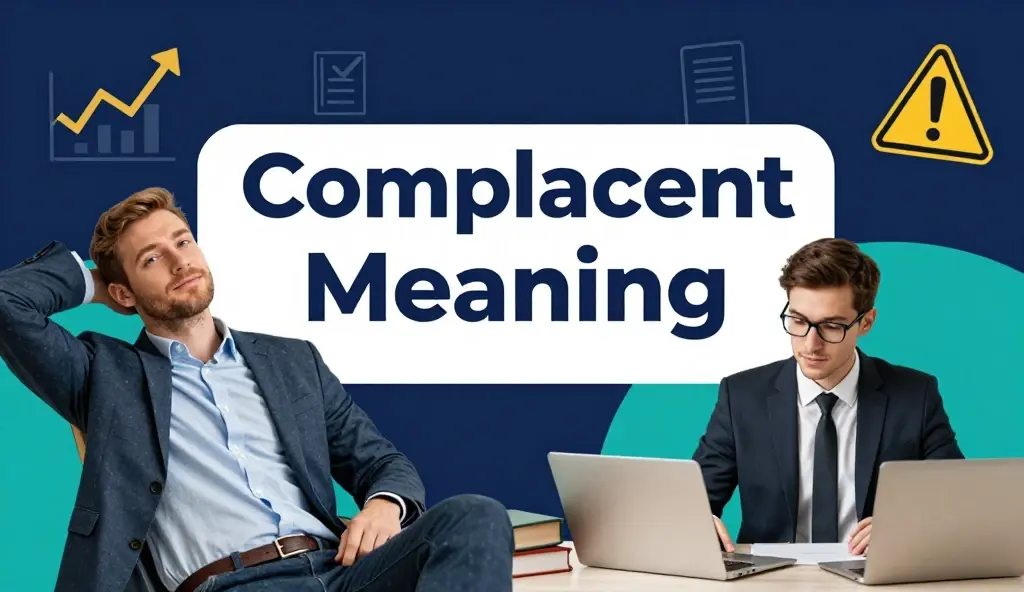
Complacent means feeling so satisfied with your current situation that you stop making an effort or fail to notice potential problems.
It often implies overconfidence or a lack of motivation to improve, which can lead to missed opportunities or setbacks.
Quick Answer
Complacent means being overly satisfied or comfortable with a situation, causing someone to stop trying to improve or recognize possible risks. It usually has a negative meaning.
What Does Complacent Mean?
Complacent is an adjective used to describe someone who is too content with their achievements, abilities, or current circumstances.
A complacent person may:
- Stop working hard.
- Ignore warning signs.
- Believe nothing needs to change.
- Become overconfident.
- Resist learning or improving.
Examples
- “After winning several championships, the team became complacent.”
- “Don’t become complacent just because things are going well.”
What Does Complacent Mean in Everyday Life?
In daily life, complacent describes people who become too comfortable and stop making progress.
For example:
- An employee who stops developing new skills.
- A student who quits studying after getting good grades.
- A business that stops innovating because it’s already successful.
Being complacent doesn’t mean someone is happy—it means they may be too satisfied to keep improving.
What Does Complacent Mean in Work and Business?
In the workplace, complacency can affect both employees and organizations.
Examples include:
- Ignoring customer feedback.
- Refusing to adapt to new technology.
- Assuming success will continue without effort.
- Overlooking competition.
Many successful companies encourage continuous improvement to avoid becoming complacent.
What Does Complacent Mean in Love and Relationships?
In relationships, complacent can describe someone who stops putting effort into maintaining the relationship.
Examples
- Forgetting to communicate regularly.
- Taking a partner for granted.
- No longer showing appreciation.
- Assuming the relationship will stay strong without effort.
Healthy relationships usually require ongoing care and attention.
What Does Complacent Mean in Texting?
Although complacent is not a common texting abbreviation, people use the full word when discussing attitudes or behavior.
Examples
- “I don’t want to become complacent.”
- “Success made them complacent.”
What Does Complacent Mean in Slang?
Complacent is not slang.
It is a standard English word used in both formal and informal situations.
What Does Complacent Mean on Social Media?
On TikTok, Instagram, LinkedIn, X (formerly Twitter), Reddit, and Facebook, complacent often appears in discussions about:
- Personal growth
- Career advice
- Fitness motivation
- Business success
- Self-improvement
Example:
- “Don’t let success make you complacent.”
Influencers and motivational speakers frequently use the word to encourage continuous learning and growth.
Does Complacent Have a Spiritual Meaning?
While complacent has no specific spiritual definition, many religious and philosophical teachings encourage people to avoid spiritual complacency by continuing to grow, learn, and reflect.
The exact interpretation varies depending on the tradition.
Does Complacent Have a Cultural Meaning?
Yes.
Across many cultures, complacency is generally viewed as something to avoid because it can prevent:
- Personal growth
- Innovation
- Learning
- Improvement
- Success
Many cultures value humility, perseverance, and lifelong learning instead.
Examples and Usage
Here are some examples of complacent in everyday English.
Workplace
“The company became complacent after years of success.”
School
“He became complacent after scoring well on his first exam.”
Sports
“The coach warned the players not to become complacent.”
Personal Development
“Stay confident, but don’t become complacent.”
How Context Changes the Meaning of Complacent
| Context | Meaning |
| Workplace | Too comfortable to improve |
| Education | Stops studying after success |
| Sports | Overconfident after winning |
| Relationships | Stops putting in effort |
| Personal growth | No longer striving to improve |
The core meaning remains being overly satisfied and failing to continue improving.
Similar Words to Complacent
Here are some related words:
| Word | Meaning |
| Self-satisfied | Too pleased with oneself |
| Overconfident | Excessively confident |
| Content | Satisfied (not always negative) |
| Comfortable | At ease (neutral) |
| Unmotivated | Lacking drive |
| Careless | Not paying enough attention |
Although similar, these words are not exact synonyms.
How to Reply When Someone Says “Don’t Be Complacent”
If someone says:
“Don’t be complacent.”
You could reply:
- “You’re right—I’ll keep working hard.”
- “Thanks for the reminder.”
- “There’s always room for improvement.”
These responses show a willingness to keep learning and growing.
Common Mistakes About Complacent
Myth 1
Complacent means happy.
False.
Someone can be happy without being complacent. Complacent specifically means becoming too satisfied to continue improving or recognizing risks.
Myth 2
Confidence and complacency are the same.
False.
Confidence is believing in your abilities, while complacency means stopping your efforts because you think no more improvement is needed.
Myth 3
Complacent always means lazy.
False.
A complacent person may still work hard, but they may stop challenging themselves or preparing for future problems.
FAQs:
Q1. What does complacent really mean?
Complacent means being overly satisfied or comfortable with a situation, causing someone to stop improving or paying attention to possible risks.
Q2. Is complacent positive or negative?
It is usually negative because it suggests a lack of effort, awareness, or motivation to improve.
Q3. Is complacent romantic?
No.
It is not a romantic term, although it can describe someone who stops putting effort into a relationship.
Q4. How should someone respond if they’re called complacent?
A thoughtful response might be:
- “I’ll reflect on that and keep improving.”
- “Thanks for the feedback.”
- “I don’t want to stop growing.”
Q5. Is complacent commonly used on social media?
Yes. It often appears in motivational posts about success, careers, fitness, education, and personal development.
Q6. How do you pronounce complacent?
Complacent is commonly pronounced:
kuhm-PLAY-suhnt
(IPA: /kəmˈpleɪ.sənt/)
Conclusion:
Complacent means being too satisfied or comfortable with your current situation, leading you to stop improving or overlook potential challenges.
if in work, school, relationships, or personal growth, complacency is generally seen as something to avoid because continuous learning and effort are key to long-term success.
Now that you understand the meaning of complacent, you’ll be able to recognize and use the word correctly in conversations, articles, workplace discussions, and everyday life.

Professional Language Consultant with expertise in vocabulary building and academic writing resources.