
Have you ever heard someone say “Namaste” at the end of a yoga class, in an Indian greeting, or on social media?
Although the word is recognized around the world, many people are unsure of its true meaning or how it should be used.
Namaste is much more than a simple hello—it’s a traditional greeting with deep cultural and spiritual roots.
Namaste is a Sanskrit word that is commonly translated as “I bow to you” or “I honor the divine in you.”
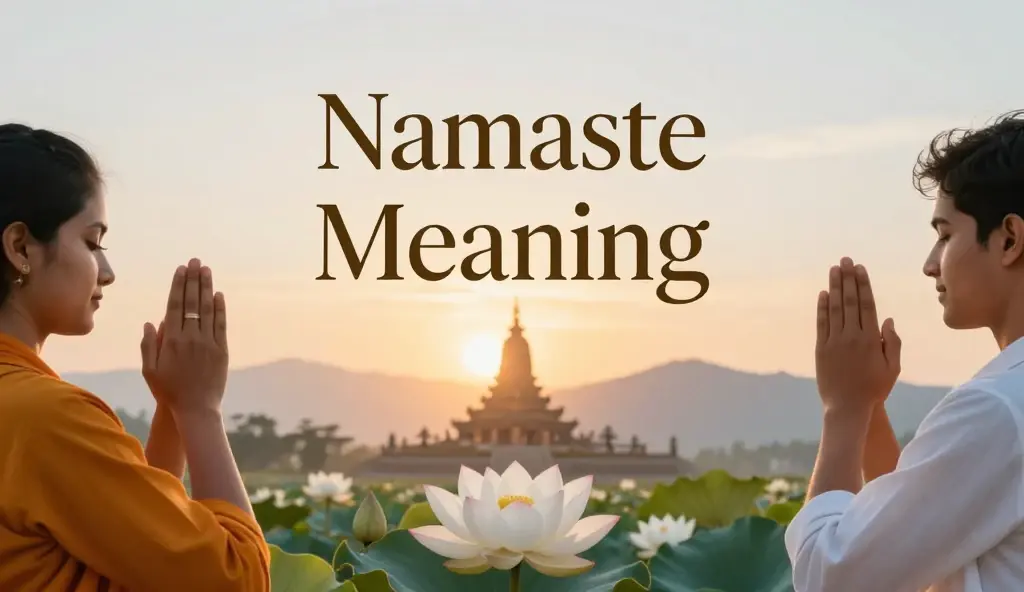
In everyday use across India and Nepal, it is a respectful greeting used to say hello, goodbye, or welcome, often accompanied by pressing the palms together in front of the chest and giving a slight bow.
Quick Answer
Namaste is a traditional greeting that means “I bow to you” or “I respectfully greet you.” It is commonly used in India and Nepal as a polite way to say hello, goodbye, or welcome.
What Does Namaste Mean?
The word Namaste comes from Sanskrit, an ancient language of India.
It is made up of two parts:
- Namah = Bow, respect, or reverence
- Te = To you
Together, Namaste literally means:
- “I bow to you.”
- “I respectfully greet you.”
In many spiritual traditions, it is also interpreted as “The divine in me honors the divine in you.” While this interpretation is widely shared in yoga and spiritual communities, it is a philosophical explanation rather than a literal translation.
What Does Namaste Mean in Everyday Life?
In India, Nepal, and some neighboring regions, Namaste is a common greeting used in daily life.
People say Namaste when:
- Meeting someone.
- Saying goodbye.
- Welcoming guests.
- Greeting elders.
- Showing respect.
It is considered polite and respectful in both formal and informal settings.
Examples
- “Namaste! How are you?”
- “Namaste, it’s nice to meet you.”
What Does Namaste Mean in Yoga?
In yoga classes, instructors often say Namaste at the end of a session.
Here, the word is used to express:
- Gratitude.
- Respect.
- Peace.
- Appreciation for practicing together.
Many students respond by saying “Namaste” back, although practices vary depending on the instructor and tradition.
What Does Namaste Mean in Texting?
In text messages, Namaste is usually used as a respectful greeting.
Examples
- “Namaste! Hope you’re doing well.”
- “Namaste and thank you for your help.”
It can also appear in conversations about yoga, meditation, or Indian culture.
What Does Namaste Mean in Love and Relationships?
Namaste is not a romantic expression.
However, it may be used respectfully between partners or family members, especially in cultures where it is a traditional greeting.
Its purpose is to show courtesy and respect rather than romance.
What Does Namaste Mean in Slang?
Namaste is not slang.
It is a traditional greeting with cultural and historical significance.
What Does Namaste Mean on Social Media?
On platforms like TikTok, Instagram, Facebook, Reddit, and X (formerly Twitter), Namaste is often associated with:
- Yoga
- Meditation
- Wellness
- Mindfulness
- Indian culture
- Travel
Some people also use it simply as a peaceful greeting or farewell.
Does Namaste Have a Spiritual Meaning?
Yes.
In Hinduism and some other Indian spiritual traditions, Namaste can express respect for the divine or sacred nature believed to exist within every person.
Many people interpret it as:
“The divine in me honors the divine in you.”
Although this is a meaningful spiritual interpretation, it’s important to remember that in everyday life, Namaste is also simply a polite greeting.
Does Namaste Have Cultural Significance?
Yes.
Namaste is an important part of the cultures of India and Nepal and is recognized around the world.
It symbolizes values such as:
- Respect
- Humility
- Kindness
- Courtesy
- Peace
The accompanying gesture of joining the palms together is known as the Añjali Mudrā and is widely recognized as a sign of respect.
How Do You Perform the Namaste Gesture?
The traditional greeting includes:
- Press your palms together.
- Hold your hands in front of your chest.
- Slightly bow your head.
- Say “Namaste.”
This gesture expresses respect without physical contact.
Examples and Usage
Here are some examples of Namaste in everyday English.
Greeting Someone
“Namaste! Welcome to our home.”
Yoga Class
“The instructor ended the session by saying, ‘Namaste.'”
Travel
“People greeted visitors with a warm ‘Namaste.'”
Text Message
“Namaste! Wishing you a wonderful day.”
How Context Changes the Meaning of Namaste
| Context | Meaning |
| Everyday greeting | Hello, goodbye, or welcome |
| Yoga | Gratitude and mutual respect |
| Spiritual discussions | Honoring the divine in others |
| Indian culture | Traditional respectful greeting |
| Social media | Wellness, mindfulness, or cultural reference |
The core idea remains respectful acknowledgment of another person.
Similar Greetings
Here are some greetings similar to Namaste:
| Greeting | Meaning |
| Hello | General greeting |
| Greetings | Formal welcome |
| Salaam | Peaceful greeting used in many Muslim communities |
| Sat Sri Akal | Traditional Sikh greeting |
| Vanakkam | Traditional Tamil greeting |
Each greeting has its own cultural and linguistic background.
How to Reply When Someone Says “Namaste”
If someone greets you with “Namaste,” you can simply reply:
- “Namaste.”
- “Namaste! Nice to meet you.”
- “Namaste. Thank you.”
Returning the greeting is both polite and appropriate.
Common Mistakes About Namaste
Myth 1
Namaste only means “hello.”
False.
It can also mean goodbye, welcome, or a respectful greeting.
Myth 2
Namaste is only used in yoga.
False.
It is a traditional greeting used in everyday life across India and Nepal.
Myth 3
Namaste belongs to only one religion.
False.
While it has roots in Sanskrit and is commonly associated with Hindu traditions, it is widely used as a cultural greeting by people of different backgrounds in South Asia.
FAQs:
Q1. What does Namaste really mean?
Namaste means “I bow to you” or “I respectfully greet you.” It is a traditional greeting expressing respect and courtesy.
Q2. Is Namaste positive or negative?
It has a positive meaning and is associated with respect, kindness, and goodwill.
Q3. Is Namaste romantic?
No.
It is a respectful greeting, not a romantic expression.
Q4. How should someone reply to Namaste?
The most common reply is simply:
“Namaste.”
Q5. Is Namaste commonly used on social media?
Yes. It’s often seen in posts about yoga, meditation, wellness, Indian culture, and travel.
Q6. How do you pronounce Namaste?
Namaste is commonly pronounced:
NAH-muh-stay
(IPA: /ˈnɑː.mə.steɪ/)
Conclusion:
Namaste is a traditional Sanskrit greeting that means “I bow to you” or “I respectfully greet you.”
Used throughout India and Nepal, it expresses courtesy, humility, and respect.
While it has spiritual significance in some traditions and is widely recognized in yoga communities, it is also an everyday greeting used to say hello, goodbye, or welcome.
Now that you understand the meaning of Namaste, you’ll be able to use and recognize this meaningful greeting with greater appreciation for its cultural and historical significance.

Professional Language Consultant with expertise in vocabulary building and academic writing resources.