
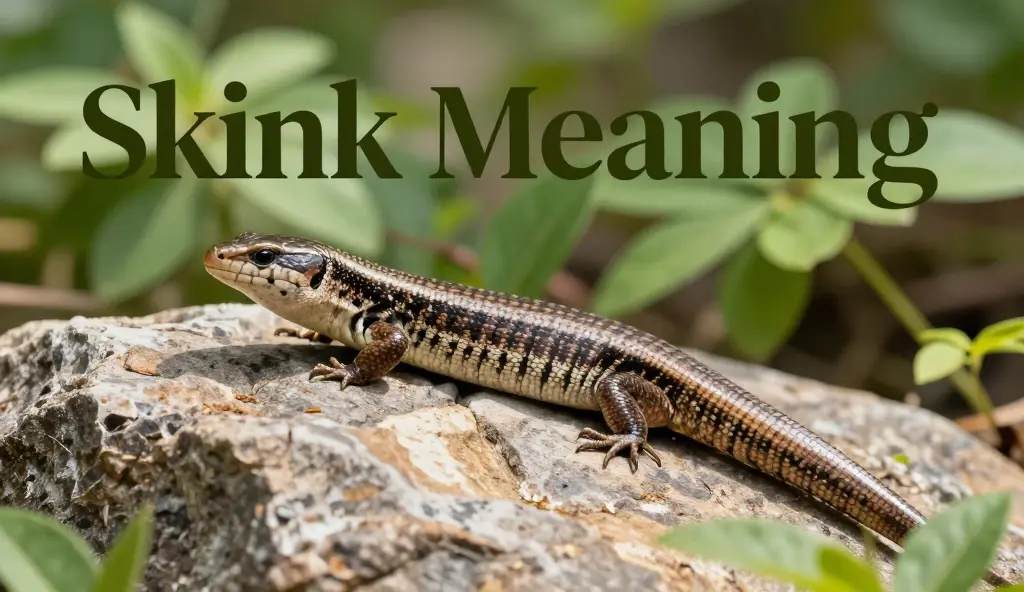
You may see a small, shiny lizard run under a rock or hide near a garden wall. That quick little reptile could be a skink.
The word may sound like “skin” or “skunk,” but it has a different meaning. A skink is a type of lizard. Most skinks have long bodies, smooth scales, short legs, and pointed tails. Some types have very small legs, while others have no visible legs.
The word also has a few old or regional uses. In Scottish food, it appears in the name Cullen skink, a thick fish soup. An old form of the word can also mean to pour or serve a drink.
This article explains the skink meaning, pronunciation, origin, examples, and common uses. It also clears up common mix-ups, such as skink versus skunk.
Quick Answer
A skink is a type of lizard, often with a long body, smooth scales, short legs, and a pointed tail. Skinks belong to the reptile family called Scincidae. The word can also appear in old or Scottish uses, but the animal definition is the most common meaning in modern English.
Quick Meaning Table
| Term | Details |
| Word | Skink |
| Main meaning | A type of small or medium-sized lizard |
| Part of speech | Noun |
| Pronunciation | Skink, rhymes with “ink” |
| Scientific family | Scincidae |
| Common features | Smooth scales, long body, and often short legs |
| Example | “A small skink ran under the garden rock.” |
What Does Skink Mean?
A skink is a lizard that belongs to the Scincidae family.
Many skinks have smooth, shiny scales. Their bodies often look long when compared with their legs. Some have short legs, and a few kinds have no visible legs at all.
Skinks live in many parts of the world. People often find them in warm places, but different types can live in forests, deserts, grasslands, gardens, and rocky areas.
The word “skink” does not describe only one species. It is a general name for a large family of related lizards. A blue-tongued skink, ground skink, broad-headed skink, and sand skink are all different members of this group.
Skink Meaning in Simple Words
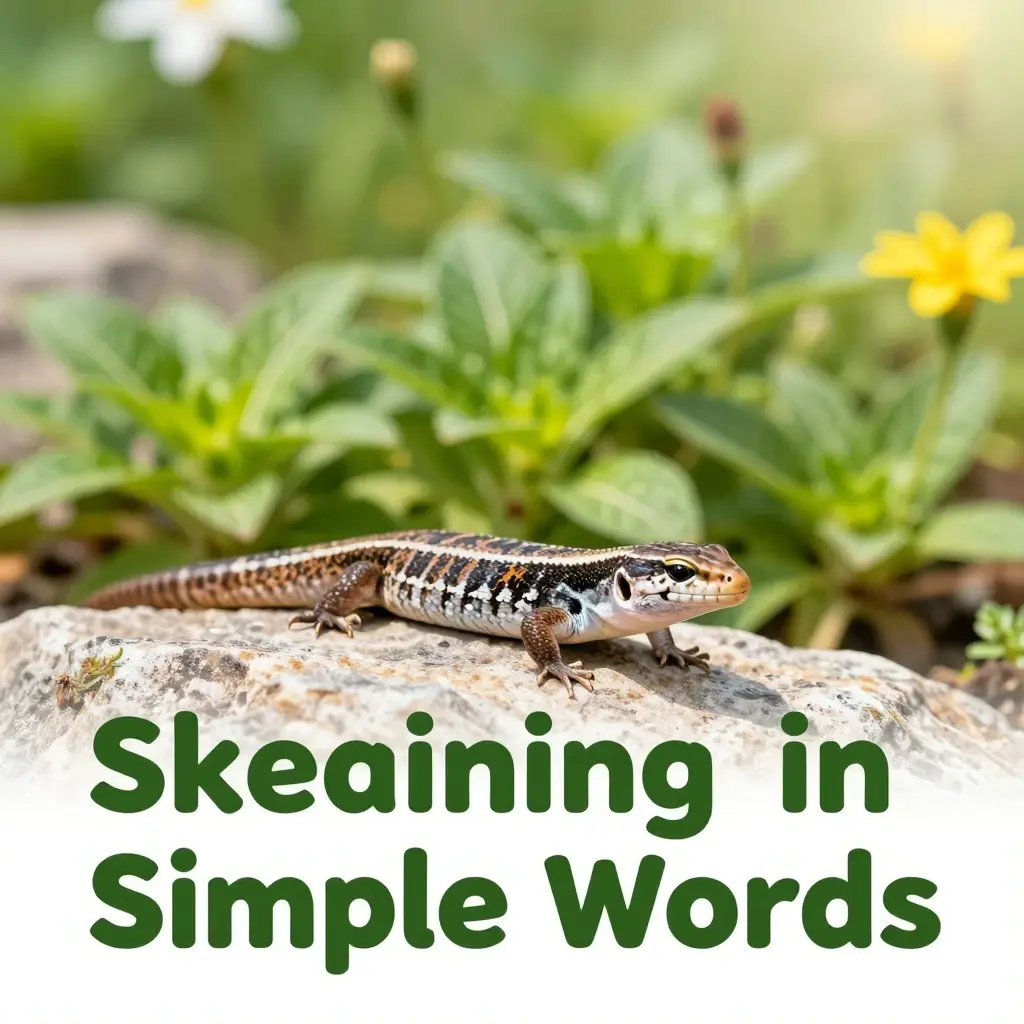
In simple words, a skink is a smooth-scaled lizard.
It may look like a common lizard, but it often has a longer body and smaller legs. Some skinks move their bodies from side to side as they run. A skink with tiny legs may even look a little like a snake.
For example:
“A brown skink was hiding under the leaves.”
This sentence means that a small type of lizard was hiding there.
The word is usually a noun. It names the animal.
Different Meanings of Skink
The word “skink” has more than one recorded meaning. However, most people use it to name a type of lizard.
A Type of Lizard
This is the main modern meaning.
A skink is a reptile in the Scincidae family. Many types have smooth scales and long, rounded bodies. Their legs may be normal, small, or almost missing.
Example:
“The skink warmed itself on a flat stone.”
Cambridge defines a skink as a small lizard found in many warm parts of the world. Merriam-Webster gives the broader scientific meaning of a lizard from the Scincidae family.
To Pour or Serve a Drink
“Skink” can also be an old or regional verb. In this use, it means to pour, draw, or serve a drink.
This meaning is rare in modern everyday English.
Example:
“The host skinked ale for the guests.”
Most English speakers would now say “poured” or “served” instead. Merriam-Webster marks this use as mainly dialectal.
A Scottish Drink or Drinking Session
In some older Scottish uses, “skink” can mean a drink, especially a weak drink. It may also refer to a period of drinking.
This meaning is uncommon and may appear only in old writing or regional speech.
A Soup in the Name Cullen Skink
The word appears in Cullen skink, a traditional Scottish soup. It is usually made with smoked haddock, potatoes, onions, and milk.
In this name, “skink” does not mean a lizard. The dish does not contain skink meat.
The food-related word has links to an older Scots word for a broth or soup. Some historical explanations also connect it with a shin or cut of beef used in soup.
What Does a Skink Look Like?
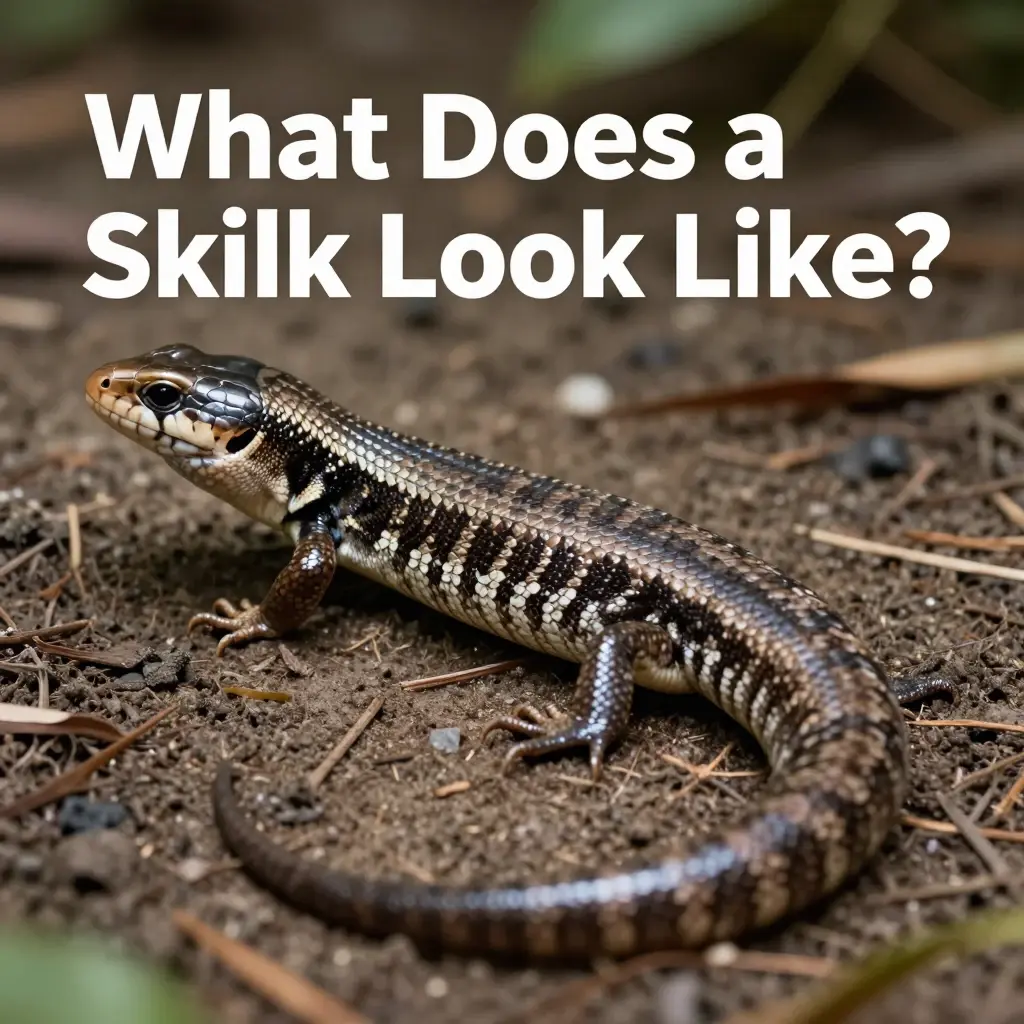
Skinks come in many colors and sizes. Still, many share a few common features.
A typical skink may have:
- Smooth, overlapping scales
- A long or rounded body
- A pointed or thick tail
- Short legs
- A neck that is hard to see
- Small eyes
- Brown, gray, black, blue, or striped skin
Some young five-lined skinks have bright blue tails. Blue-tongued skinks have wide bodies and bright blue tongues. Sandfish skinks have bodies that help them move under loose desert sand.
Not every skink looks the same. Some have strong legs, while others have tiny limbs. A few kinds look almost like snakes because their legs have become very small.
Where Do Skinks Live?
Skinks live in many regions around the world.
Different species can live in:
- Forests
- Deserts
- Grasslands
- Gardens
- Farms
- Rocky land
- Sandy areas
- Areas under logs or leaves
Ground skinks live in parts of the central and eastern United States and northern Mexico. Five-lined skinks often choose moist wooded places with logs, stones, loose bark, or brush for cover.
Sandfish skinks live in dry desert areas. They spend much of their time moving under the sand.
The home of a skink depends on its species. One type may need moist soil, while another may live well in a hot desert.
How to Pronounce Skink
Skink is pronounced:
SKINK
It has one syllable and rhymes with ink.
The phonetic spelling is:
/skɪŋk/
Start with the “sk” sound in “skin.” End with the “ink” sound in “think” or “drink.”
Say it slowly:
sk + ink = skink
The UK and US pronunciations are the same.
Origin of the Word Skink
The animal word “skink” entered English in the late 1500s.
It came through Latin scincus, which came from the Greek word skinkos. These older words were names for a kind of lizard.
The exact older source of the Greek word is not known.
The old verb meaning “to pour or serve a drink” has a different history. It came from a Germanic language source and is linked with old words for pouring or giving a drink.
This means the animal noun and the old drinking verb look the same today, but they came from different word histories.
How to Use Skink in a Sentence
Here are ten natural examples:
- “A small skink ran across the garden path.”
- “The child found a skink hiding under a log.”
- “This type of skink has a bright blue tail.”
- “The skink stayed still until the bird flew away.”
- “We saw a brown skink near the front steps.”
- “A blue-tongued skink opened its mouth.”
- “The sand skink moved below the dry sand.”
- “The skink warmed its body in the morning sun.”
- “Cullen skink is a Scottish soup, not a lizard dish.”
- “The smooth scales made the skink look shiny.”
The word is a countable noun. Use “a skink” for one animal and “skinks” for more than one.
One: “I saw a skink.”
More than one: “We saw three skinks.”
Conversation Examples
Conversation One
Liam: What was that small animal near the wall?
Emma: I think it was a skink.
Liam: Is that a type of lizard?
Emma: Yes. It ran under the rocks.
Conversation Two
Noah: The menu has something called Cullen skink.
Ava: Does it have lizard in it?
Noah: No. It is a Scottish soup made with smoked fish and potatoes.
The first conversation uses the main animal meaning. The second shows the food-related use.
Synonyms and Similar Words
“Skink” has no exact common synonym because it names a certain family of lizards. Still, several related words may appear near it.
| Word | Meaning and difference |
| Lizard | A broad name for many reptiles, including skinks |
| Scincid | A scientific word for a member of the skink family |
| Reptile | A much wider animal group that includes lizards, snakes, turtles, and crocodiles |
| Blue-tongued skink | A large type of skink known for its blue tongue |
| Ground skink | A small skink that spends much of its time near the ground |
| Sand skink | A skink that lives in sandy places |
| Five-lined skink | A striped North American skink, often with a blue tail when young |
“Lizard” is the best simple substitute, but it is less exact. Every skink is a lizard, but not every lizard is a skink.
Common Confusions
Skink vs. Skunk
A skink is a lizard.
A skunk is a black-and-white mammal known for making a strong smell when it feels unsafe.
The words look similar, but the animals are very different.
Skink: “A skink hid under the stone.”
Skunk: “A skunk crossed the road.”
Skink vs. Snake
Some skinks have tiny legs and long bodies, so they may look like snakes.
However, a skink is a type of lizard. Snakes form a different reptile group. Many skinks have visible legs, eyelids, and outer ear openings.
Skink vs. Salamander
A skink is a reptile. A salamander is an amphibian.
Skinks have scales. Salamanders usually have soft, moist skin. Salamanders often need wet places for part of their lives.
Skink vs. Skin
“Skin” means the outer covering of a person or animal.
“Skink” names a lizard.
The extra “k” changes both the sound and the meaning.
Cullen Skink
Cullen skink is not made from a skink. It is a Scottish fish soup, usually made with smoked haddock, potatoes, and onions.
Does Skink Have a Slang Meaning?
“Skink” does not have a widely accepted slang meaning in standard English.
Most dictionaries define it as a lizard or list its old meaning linked to serving a drink. Some user-made slang sites may show local, rude, or invented uses. These meanings are not standard and may not be understood by most people.
When someone writes “skink” in a normal message, they most likely mean the animal. The full sentence will help you understand the intended meaning.
Skink Meaning in Texting and Social Media
Skink does not have a common special meaning in texting.
On Instagram, TikTok, Reddit, Facebook, or WhatsApp, it usually means the lizard. Someone may use the word while sharing:
- A reptile photo
- A pet skink video
- A wildlife post
- A gardening question
- Information about blue-tongued skinks
- A discussion about Scottish food
For example:
“Does anyone know what kind of skink this is?”
In this message, the person wants help naming a lizard.
Do not assume that “skink” is an internet abbreviation. It is a full word, not a common texting acronym.
Is Skink Offensive?
The normal word “skink” is not offensive. It is the correct name for a type of lizard.
You can safely use it in animal articles, schoolwork, wildlife posts, and normal conversations.
However, avoid calling a person a “skink.” A few nonstandard online slang entries may use the word as an insult. These uses are rare, unclear, and not part of standard English.
When you mean the animal, the word is neutral and correct.
FAQs:
What Is the Simple Meaning of Skink?
A skink is a type of lizard. It often has smooth scales, a long body, a pointed tail, and short legs. Some skinks have tiny legs or no visible legs, which can make them look a little like snakes.
Is a Skink a Lizard or a Snake?
A skink is a lizard, not a snake. Some types have long bodies and very small legs, so people may mistake them for snakes. Skinks belong to the lizard family Scincidae and often have smooth, shiny scales.
What Is the Plural of Skink?
The plural of skink is skinks. Add “s” when talking about two or more of the animals. For example, you can say, “One skink was under the rock,” or, “Several skinks lived in the garden.”
How Do You Pronounce Skink?
Pronounce skink as SKINK. It has one syllable and rhymes with “ink.” Its phonetic form is /skɪŋk/. The word begins with the same “sk” sound heard at the start of “skin.”
What Does Skink Mean in Slang?
Skink has no common or widely accepted slang meaning. Its standard meaning is a type of lizard. Some user-made online dictionaries list rare insults, but these uses are not standard and may vary between small groups.
What Does Skink Mean in Texting?
In texting, skink normally means the animal. It is not a common abbreviation or secret code. A person may use it while talking about a pet, a wild lizard, a photo, or a reptile they found outside.
Are Skinks Harmful to People?
Most small skinks seen in gardens try to escape rather than approach people. They usually hide under rocks, leaves, logs, or other cover. However, people should avoid grabbing wild animals because any frightened animal may defend itself.
What Is a Blue-Tongued Skink?
A blue-tongued skink is a large skink known for its bright blue tongue. It comes from Australia and nearby regions. When it feels unsafe, it may open its mouth and show its tongue as a warning.
Does Cullen Skink Contain Lizards?
No. Cullen skink is a Scottish soup made with smoked haddock, potatoes, onions, and usually milk. The name comes from older Scottish food language. It does not refer to the lizard and does not contain skink meat.
What Is the Difference Between a Skink and a Skunk?
A skink is a reptile and a type of lizard. A skunk is a black-and-white mammal that can release a strong-smelling spray. Their names look alike, but the two animals are not closely related.
Conclusion:
A skink is a type of lizard that often has smooth scales, a long body, short legs, and a pointed tail. The word mainly refers to reptiles in the Scincidae family. It can also appear in rare old uses related to drinks and in the name Cullen skink, a Scottish fish soup. The meaning depends on the sentence, but the animal definition is by far the most common. Remember that a skink is a lizard, while a skunk is a very different animal.

Lexical Research Expert specializing in word origins, historical language development, and dictionary references.